
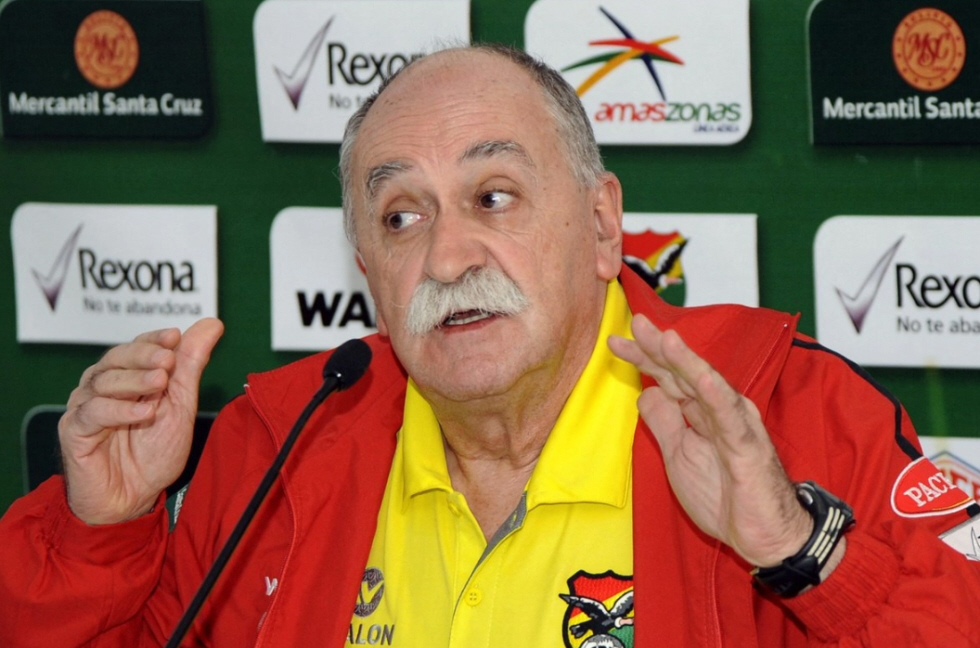
Xabier Azkargorta, the coach known for the phrase “You play the way you live,” passed away at the age of 72 in Santa Cruz de la Sierra, Bolivia, after a lifetime devoted to football and ideas. Born on September 26, 1953, in Azpeitia in Spain’s Basque Country, he was an uncommon figure in the sport: a licensed physician who approached the game from a scientific, psychological and educational perspective.
His playing career was short due to a serious knee injury, but that setback pushed him permanently toward coaching. That is where “El Bigotón” emerged —the man with the trademark mustache— surprising everyone in the 1980s when, at just 29 years old, he reached Spain’s First Division as Espanyol’s manager, becoming one of the youngest coaches in the league. He later led Valladolid, Sevilla and Tenerife, always with a calm, structured tone far removed from the shouting style of the old school.
His name, however, became legendary in Bolivia. In the early 1990s he accepted the challenge of leading a national team that had never qualified through the South American eliminatories and carried decades of sporting disappointment. Azkargorta changed habits, methods and mentality: he professionalized training sessions, insisted on physical and psychological preparation, embraced the advantages of playing at high altitude and convinced a group of players that it was possible to face the continent’s giants without fear.
The result was historic: Bolivia qualified for the 1994 World Cup in the United States, including an unforgettable victory over Brazil in La Paz, and the Basque coach became a national symbol. From that moment on, his image —complete with his unmistakable mustache— remained tied to one of the brightest chapters in Bolivian football history. After the World Cup, Azkargorta expanded his international career: he coached the Chilean national team, worked in Japan with Yokohama Marinos, spent time in Mexican football with Chivas, and held various technical and developmental roles in several football projects.
He also returned to Bolivia multiple times to manage clubs such as Bolívar, Oriente Petrolero and Sport Boys. Beyond results, he left behind a legacy built on a different way of understanding the profession —the coach as a teacher, as a manager of human groups and as someone capable of bridging cultures. His passing in Bolivia, the country that adopted him as one of its own, closes the story of a pioneer who was ahead of his time and who proved, through both his life and his work, the truth of his own phrase: that football, indeed, is played the way you live.
 Boston Celtics
 Denver Nuggets
 Milwaukee Bucks
 Phoenix Suns
 Golden State Warriors
 Los Angeles Lakers
 Miami Heat
 Dallas Mavericks


