
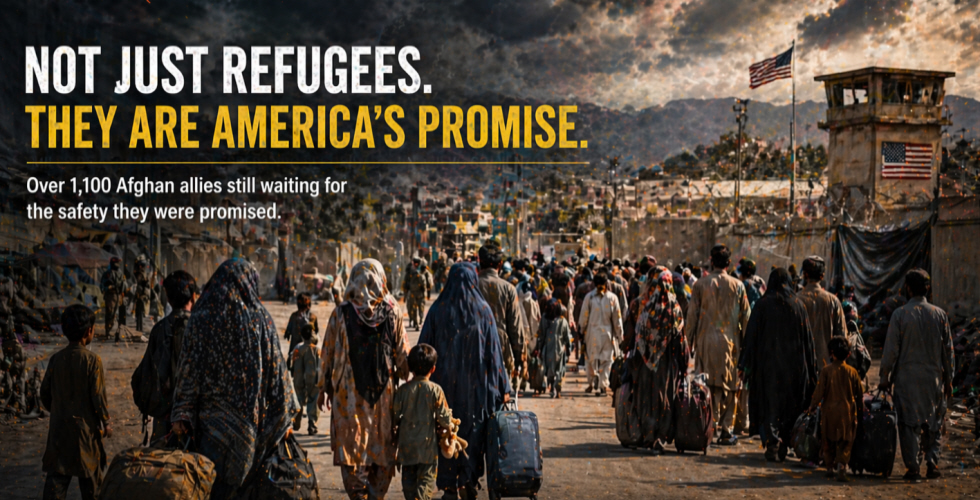
More than a thousand Afghan former allies of the United States are facing growing uncertainty over their future after new relocation plans raised serious humanitarian concerns. Many of them had supported U.S. operations during the war in Afghanistan and were awaiting resettlement. Instead of immediate transfer to the United States, they now face alternative destinations. The decision has triggered strong criticism. Most of these families are currently housed in a former U.S. military facility in Qatar, where they were expected to remain temporarily before relocation.
Many include interpreters, security staff and local personnel who worked directly with American forces. Their applications had been linked to special protection pathways. For them, the expectation was safety and permanent relocation. Under the current policy shift, some have reportedly been informed that relocation to the United States may no longer be immediate. Alternative options under discussion include transfer to other countries, including the Democratic Republic of the Congo. For many families, this possibility has created fear and uncertainty. Returning to Afghanistan is viewed by many as extremely dangerous.
The administration’s stricter review of asylum and relocation procedures followed broader security concerns and political debate inside Washington. Background checks and refugee processing became more restrictive after high-profile security incidents. This slowed approvals and created a backlog affecting thousands. Humanitarian organizations warn that time is becoming critical. Advocacy groups supporting Afghan evacuees have strongly criticized the possibility of relocation to unstable regions. They argue that moving vulnerable families to another conflict-prone country would violate the spirit of U.S. commitments.
Many of those affected include children and people already displaced multiple times. Critics describe the policy as morally damaging. Former military personnel and veterans who worked alongside Afghan interpreters have also raised concerns. They argue that these individuals risked their lives in support of U.S. missions and should not be left in prolonged uncertainty. The issue has become both humanitarian and political. Trust and credibility are now part of the debate.
For many Afghans still waiting, the fear of forced return to Afghanistan remains the most urgent concern. The political and security environment there continues to create serious risks for former U.S. partners. Many believe returning would place them directly in danger. The uncertainty has become a form of permanent exile. As Washington reviews its next steps, the situation continues to test America’s promises to its wartime allies.
The final decision will carry consequences far beyond immigration policy. It will shape perceptions of responsibility, trust and long-term strategic credibility. For these families, the outcome is not political—it is survival.


