
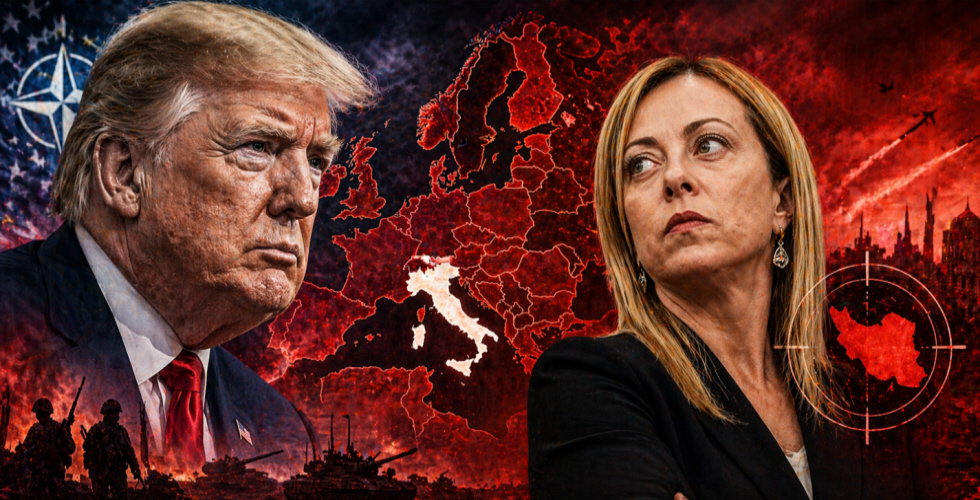
Italian Prime Minister Giorgia Meloni has found herself at the center of rising political tension after sharp comments from U.S. President Donald Trump regarding Europe’s position on the conflict involving Iran. The disagreement reflects broader strains between Washington and key European allies. Diplomatic pressure is intensifying. Personal criticism has now become part of the geopolitical debate. Trump openly questioned Meloni’s willingness to fully align with U.S. strategy in the Middle East. He suggested that stronger political backing from European NATO partners was necessary in the confrontation surrounding Iran.
His remarks implied disappointment with Italy’s response. The criticism quickly drew international attention. Meloni responded by signaling that political courage does not mean automatic agreement. She made clear that defending national interests sometimes requires open disagreement, even with close allies. Her position reflected a more cautious European approach to military escalation. Rome is seeking balance rather than direct confrontation. The dispute also touched on broader moral and diplomatic concerns inside Europe. Voices across the continent, including religious and political leaders, have called for restraint and de-escalation.
The conflict with Iran has created deep divisions over how far Western allies should go. Public opinion remains highly sensitive. Italy, as one of NATO’s major European members, faces pressure from multiple directions. Supporting alliance commitments while avoiding deeper military involvement is a difficult balance. Meloni must manage both international expectations and domestic political stability. Every statement carries strategic weight. For Washington, European hesitation is viewed as a sign of weakening unity. U.S. officials continue to push for stronger collective backing against Tehran and greater strategic clarity from allies.
The White House sees cohesion as essential. Differences inside NATO, however, remain visible. The episode highlights how personal diplomacy increasingly shapes international relations. Public criticism between leaders can quickly influence alliance dynamics and public perception. What begins as a political remark can evolve into a broader strategic issue.
Trust becomes as important as policy. As tensions with Iran continue to affect global stability, Europe’s internal divisions are becoming harder to ignore. The relationship between Washington and its allies is entering a more demanding phase. Meloni’s response signals that support does not always mean silence. The diplomatic balance is becoming more fragile.


