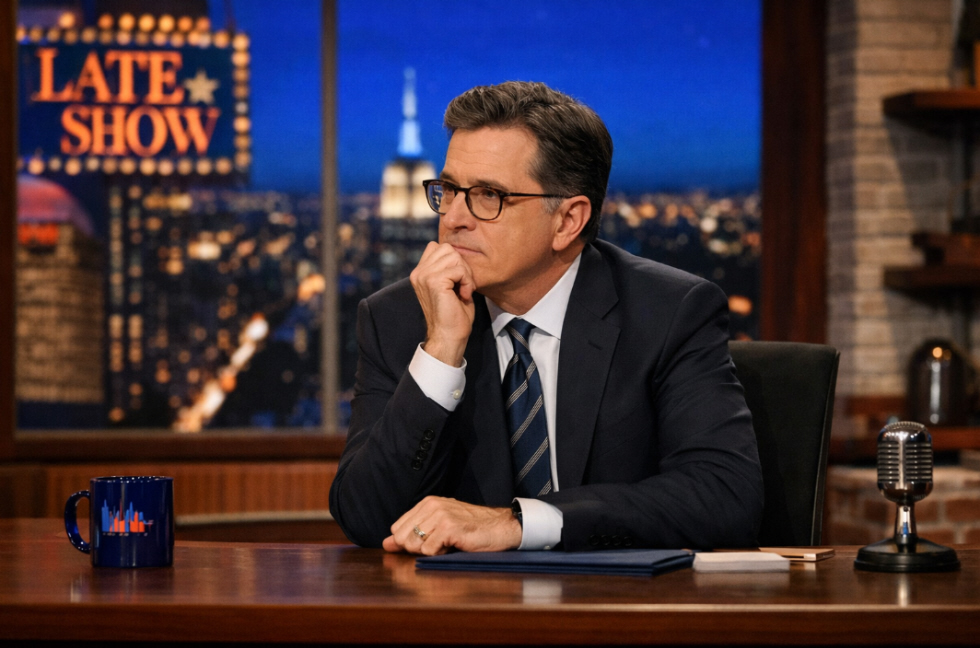
The long-running late-night television era led by Stephen Colbert is approaching its final chapter, as The Late Show is set to sign off later this year. The announcement confirms the end of one of the most influential programs in American television over the past decade. Colbert revealed the timing of the show’s farewell during a recent television appearance, marking a definitive moment for a format that once dominated nightly viewing habits.
The program will officially conclude at the end of the current broadcast cycle. CBS had previously indicated that The Late Show would come to an end following the 2025–26 season, but the confirmation of its final date has intensified discussion about the future of late-night television in the United States. Since taking over the desk, Colbert reshaped the program into a central platform for political satire, cultural commentary, and sharp monologues that resonated far beyond traditional entertainment audiences. His version of The Late Show became a defining voice during years of intense political polarization.
The program’s influence extended into public discourse, often blurring the line between comedy and political commentary. That prominence made it both highly visible and, at times, controversial within an increasingly fragmented media landscape. The end of the show also reflects broader shifts in how audiences consume content. Streaming platforms, on-demand viewing, and social media clips have steadily eroded the dominance of appointment television, particularly in late-night formats.
For CBS, the decision signals a strategic transition rather than a simple cancellation. The network now faces the challenge of redefining its late-night identity in an era where traditional formats no longer guarantee sustained relevance. As The Late Show prepares to close its curtain, its legacy remains firmly embedded in modern television history. More than just a program, it represents the conclusion of a cultural chapter shaped by satire, politics, and a changing American audience.