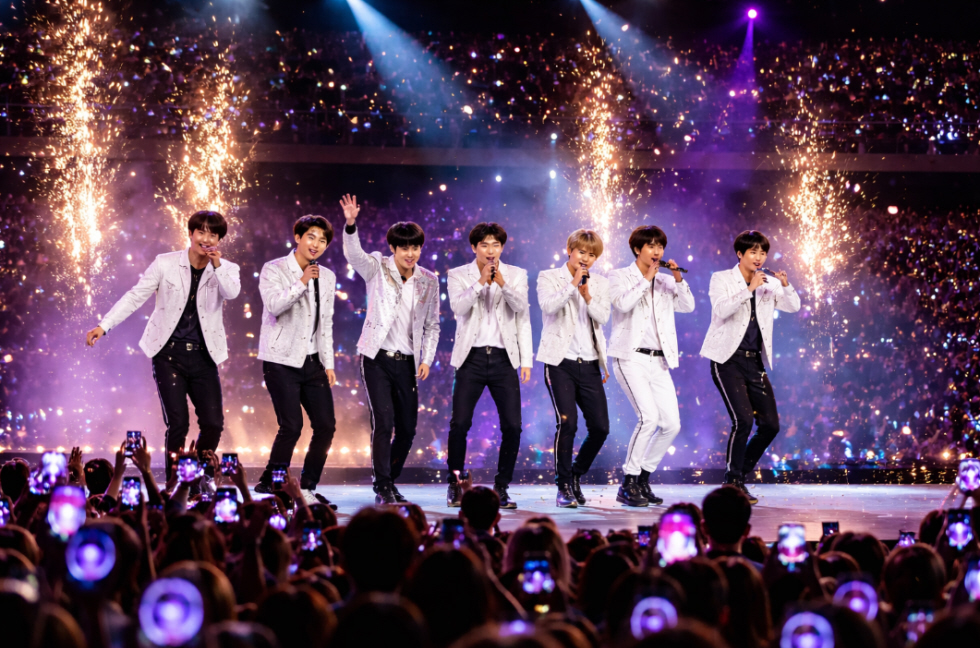
BTS’s return to the stage after a four-year hiatus triggered unprecedented demand for concert tickets in Mexico, highlighting the growing social and economic impact of K-pop in the country. Tickets for the group’s scheduled shows in Mexico City sold out within minutes, leaving hundreds of thousands of fans unable to secure entry. The scale of the phenomenon led to an unusual political response.
President Claudia Sheinbaum publicly acknowledged the pressure generated by fans and said she had reached out to South Korea to explore the possibility of adding more concert dates in Mexico, a move that drew attention due to the level of state involvement. BTS is set to perform three concerts in Mexico as part of a major world tour marking its long-awaited comeback.
However, the number of shows proved insufficient to meet demand, with close to one million people competing for roughly 150,000 available tickets. The ticketing process also sparked controversy over pricing and resale practices. While official sales channels offered a wide price range, resale platforms listed tickets at several times their original value, fueling public frustration and criticism. Consumer protection authorities stepped in following complaints of abusive practices and imposed sanctions on resale platforms over irregularities in the ticketing process. The case reignited a broader debate about fairness and regulation in the live entertainment market.
Beyond the ticket dispute, the episode underscored the growing influence of K-pop in Mexico. The country ranks among the genre’s largest global markets, with streaming consumption surging sharply in recent years and a highly engaged youth audience. The BTS phenomenon extends well beyond music, functioning as a powerful cultural and economic force capable of mobilizing massive audiences and generating significant revenue.
Its reach helps explain why an entertainment event can quickly rise to the level of public debate. The situation illustrates how popular culture, when it reaches massive scale, can spill into the political and social arena. For both authorities and the entertainment industry, the challenge lies in responding to that reality while keeping broader national priorities in focus.