
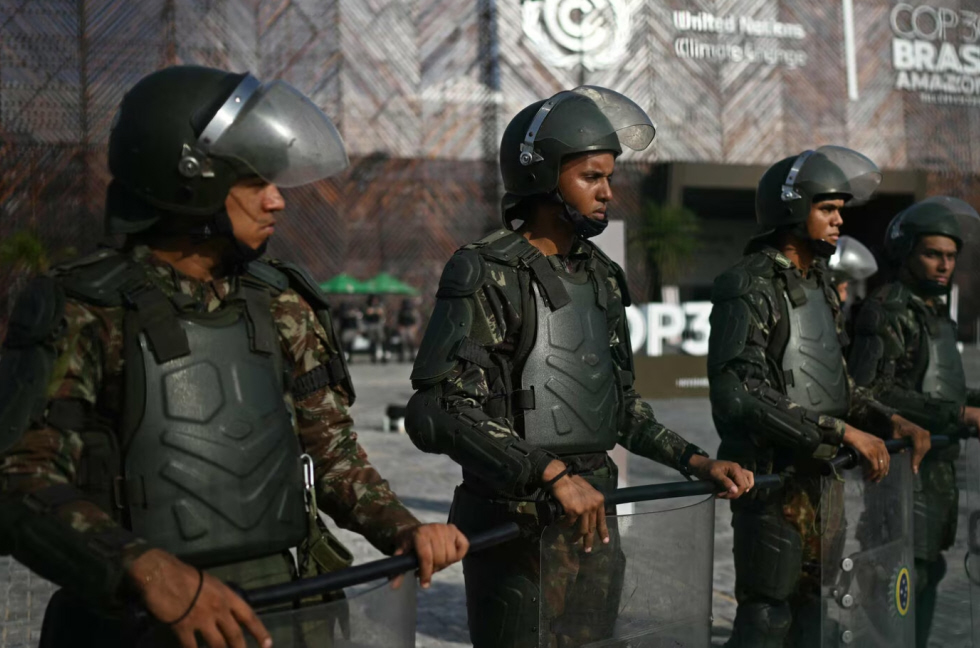
Tension surrounding the World Climate Conference in Brazil has risen sharply after Indigenous groups and their supporters broke into the heavily protected UN compound in Belém. Their action aimed to honor and demand justice for environmental defenders and Indigenous community members killed in the Amazon.
In response, security measures at COP30 were significantly tightened. Representatives from 170 organizations denounced a “massive escalation of the security forces’ presence,” which – according to an open letter – mirrors the same state violence that many Indigenous communities face in their territories when defending their forests and rivers. “Every day, more and more military police officers are present at the COP30 site.
This intimidation, carried out in response to last week’s Indigenous protests, is unacceptable and must stop. No one defending human rights, the climate, or the environment should have to fear repression,” warned the Austrian development NGO Südwind. Activists reported armed officers patrolling not only the conference venue – even in restrooms and restricted areas – but also various parts of the city of Belém.
The hotel hosting the Austrian delegation, including Environment Minister Norbert Totschnig (ÖVP), is guarded by military police throughout the night. Armed personnel were also spotted in the rainforest of a nearby national park. Paradoxically, after years of tightly restricted protests at climate conferences held in authoritarian states such as Egypt, Dubai, and Azerbaijan, loud and large demonstrations are being permitted both inside and outside the COP30 grounds.
Politically, however, progress remains limited. Until Friday, delegations from nearly 200 countries will continue negotiations on reducing greenhouse gas emissions, climate adaptation measures, and climate financing for vulnerable nations. Expectations for COP30, Totschnig admitted, “are unfortunately not very high.”
As security tightens and the streets fill with environmental and Indigenous movements, the key question remains whether civil society’s pressure will produce concrete commitments — or if political action will remain as stagnant as the rainforest leaders claim to defend.


