
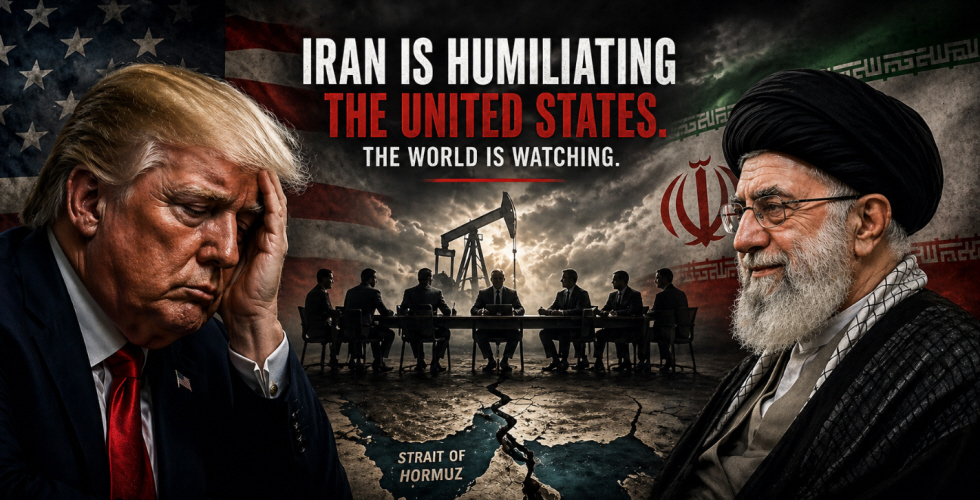
Tensions between the United States and Iran have escalated once again after German Chancellor Friedrich Merz stated that Washington is being “humiliated” by Tehran amid stalled diplomatic negotiations. His remarks created strong political reactions across Europe and international circles. The statement reflects growing concern over the lack of concrete results and the deterioration of strategic balance in the Middle East. Merz argued that Iran has shown a level of resistance and maneuvering capacity far greater than expected by the American administration.
In his view, Tehran has used time and diplomacy as tools to weaken Washington’s position without giving up its central objectives. This perception strengthens the idea that the United States underestimated the political resilience of the Iranian regime. The German chancellor also questioned whether the United States entered this new phase of the conflict without a clear and sustainable strategy. From his perspective, the White House reacted more under geopolitical pressure than through structured planning.
This criticism points not only at U.S. foreign policy, but also at how international alliances have been managed. Germany is closely watching the economic consequences of this crisis, especially the instability in global energy markets. The situation around the Strait of Hormuz and threats to oil shipping routes directly affect Europe. Berlin fears a new wave of inflation that could strike industries, transportation systems, and the daily cost of living for millions of citizens. Merz emphasized that Europe was not properly consulted before key military decisions promoted by Washington and supported by Israel.
That sense of exclusion has generated frustration within the European Union, where several leaders believe the economic consequences fall heavily on the continent without meaningful political participation in the decisions. The relationship between the United States and Israel is also at the center of the debate, as many observers believe military coordination has accelerated diplomatic deterioration. While Tel Aviv defends a hardline approach toward Iran, some European sectors argue that this posture has reduced the chances of a negotiated solution and strengthened the logic of permanent confrontation.
From Tehran, the German statements were interpreted as a sign of fracture within the Western bloc. Iranian leadership has insisted that its position is based on defending sovereignty and rejecting external pressure. Every visible division between Washington and its allies strengthens that political stance before its domestic audience. In Washington, Merz’s criticism did not go unnoticed. American analysts warn that such messages weaken the perception of U.S. global leadership and raise doubts about its strategic direction.
The international image of the Trump administration once again faces intense diplomatic scrutiny and growing questions from both allies and rivals. The conflict also carries a symbolic dimension: the idea that a superpower can be strategically contained by a nation that has lived under sanctions for decades. This narrative is powerful on the global stage and is used by various actors to challenge the Western-led international order. Iran uses that perception as a tool for regional legitimacy.
As negotiations continue without concrete progress, pressure increases on both the military and economic fronts. Europe watches with concern, the United States faces growing criticism, and the Middle East remains the center of a dispute reshaping global alliances. Merz’s phrase was not just criticism—it was a geopolitical warning of major significance.


