
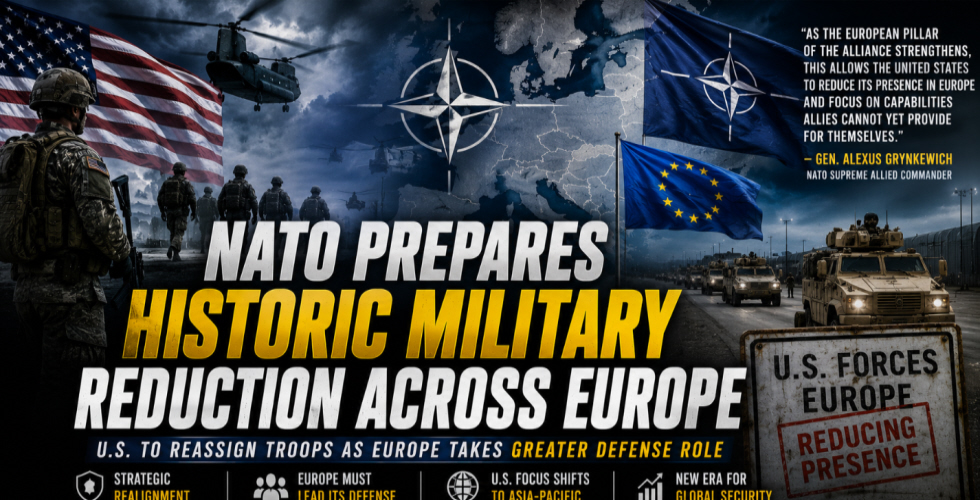
Recent statements inside NATO regarding a future reduction of American troops in Europe have triggered strong political and strategic reactions on both sides of the Atlantic. U.S. military officials and political leaders describe the process as a gradual “reassignment,” but many analysts believe it could represent a historic transformation within the Western alliance. According to American officials, the central idea is for Europe to progressively assume greater responsibility for its own military defense. Washington believes several European allies now possess enough capabilities to increase their strategic role within NATO’s overall security structure.
Allied commander Alexus Grynkewich explained that strengthening the European pillar of the alliance would allow the United States to partially reduce its military presence on the continent. At the same time, he emphasized that Washington would continue providing strategic capabilities considered essential for NATO’s long-term security. The remarks also align with the position of Vice President JD Vance, who prefers using the term “reassignments” rather than permanent withdrawals.
The careful language reflects the extremely sensitive political balance currently surrounding the future of the American military presence in Europe. For decades, U.S. military bases and troop deployments across Europe were viewed as a central pillar of deterrence against external threats. However, the current international landscape is forcing Washington to redistribute strategic resources toward other emerging priority regions around the world.
Many geopolitical analysts believe America’s primary strategic focus is gradually shifting toward the Asia-Pacific region because of the growing military and economic influence of China. This could explain why Washington wants Europe to strengthen its own defense autonomy while the United States concentrates more heavily on global competition elsewhere. At the same time, the war in Ukraine and rising tensions involving Russia continue generating deep concerns among several European governments.
Some leaders fear that a significant reduction in American troop presence could alter the continent’s security balance during one of Europe’s most fragile moments in decades. The situation is also reigniting internal debates across Europe regarding military spending, army modernization, and the continent’s ability to respond independently to future crises.
Over recent years, several NATO members have already sharply increased defense budgets amid growing fears of global instability. Military experts believe the process could unfold gradually over many years in order to avoid major disruptions within the alliance. Nevertheless, even the possibility of a smaller American presence is already reshaping long-term strategic discussions surrounding Europe’s future security architecture.
Although Washington insists it remains fully committed to NATO, the latest statements make it increasingly clear that the Western military structure may be entering a new historical phase. The debate over who will ultimately lead Europe’s defense in the coming decades has now officially begun.


