

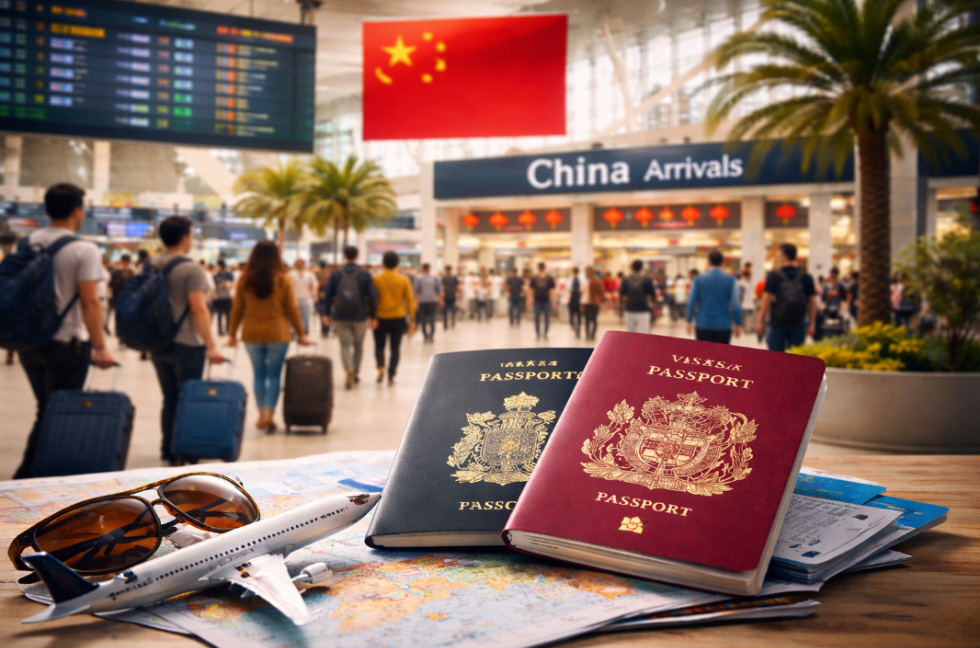
China has announced a significant easing of its travel policies by granting visa-free entry to citizens of Canada and the United Kingdom through December 31, 2026. The move allows eligible travelers to enter mainland China for short stays without the need to apply for a visa in advance. Under the new arrangement, holders of ordinary passports from both countries may stay in China for up to 30 days for purposes including tourism, business visits, family reunions, exchanges, and transit.
The decision aligns Canada and Britain with dozens of other nations already benefiting from similar temporary entry policies. The announcement comes amid ongoing diplomatic and economic discussions between Beijing and Western governments. In recent months, trade talks have focused on expanding commercial ties and stabilizing bilateral relations after periods of tension.
For businesses, the visa-free measure is expected to simplify travel logistics and reduce administrative barriers for executives, investors, and entrepreneurs seeking opportunities in the Chinese market. Easing entry requirements can serve as a practical tool to encourage cross-border engagement. Tourism is also likely to benefit. The policy may boost visitor flows from both countries, especially as global travel continues to recover and international mobility regains momentum.
Short-term stays without visa processing delays could make China a more accessible destination. From Beijing’s perspective, the initiative reflects a broader effort to signal openness and improve economic connectivity. Expanding visa-free access can be viewed as part of a strategy to enhance foreign confidence and stimulate international exchange.
However, the policy has also sparked debate abroad. Some critics argue that closer engagement with China should not overshadow ongoing concerns related to human rights issues and national security matters. Supporters, on the other hand, contend that increased travel and dialogue can foster better mutual understanding and create channels for constructive cooperation.
Economic pragmatism remains a central factor in the evolving relationship. The visa exemption is currently scheduled to remain in effect through the end of 2026, making it a time-limited but potentially impactful initiative.
Future adjustments may depend on diplomatic developments and broader geopolitical dynamics. For now, the decision marks a notable shift in travel accessibility between China and two major Western nations, signaling a period of renewed engagement and expanded mobility.


