
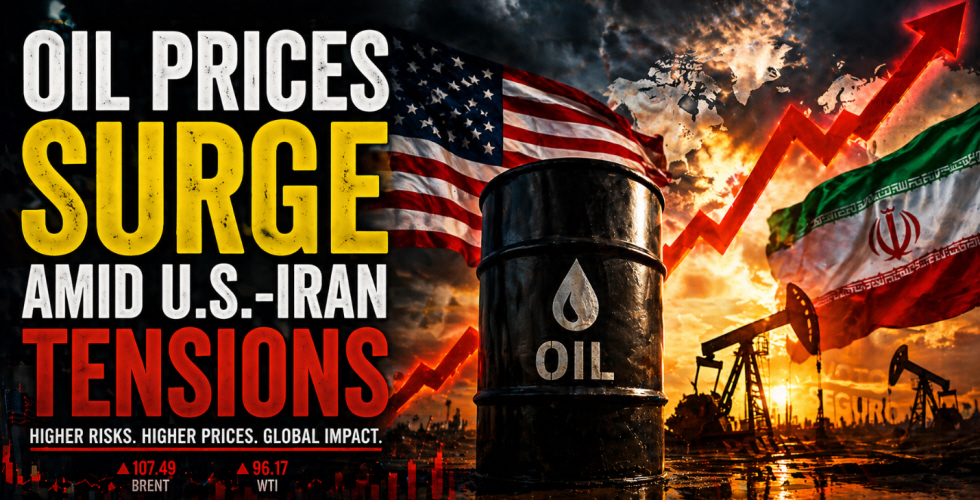
International oil prices rose sharply again this Monday after expectations of diplomatic progress between the United States and Iran weakened. The market reacted quickly to signs of cooling peace talks, reflecting a new wave of geopolitical uncertainty. Every tension in the Middle East directly impacts global energy, and this time was no exception. North Sea Brent crude recorded an increase of more than two percent, reaching $107.49 per barrel, while U.S. WTI crude climbed nearly two percent to $96.17. These figures reflect the extreme sensitivity of energy markets to any political movement. Oil continues to be one of the main indicators of international financial nervousness.
During the weekend, hopes for a possible revival of diplomatic efforts began to fade. The cancellation of a planned trip by U.S. envoys to Islamabad was interpreted as a sign of cooling negotiations. Although Iranian Foreign Minister Abbas Araghchi had already arrived in Pakistan, the political landscape changed quickly and uncertainty increased. Donald Trump decided to suspend the trip of his representatives Steve Witkoff and Jared Kushner, which was seen as an important pause in the dialogue process. Later, the U.S. president stated that Iran should take the initiative if it truly wanted to negotiate.
That position further raised tensions and exposed the fragility of the diplomatic moment. For international markets, any interruption in dialogue between Washington and Tehran represents an immediate risk to global energy supply. The Strait of Hormuz remains one of the most sensitive points on the planet for oil transit. A military escalation or even the threat of a blockade could send prices even higher. Europe is watching this new surge with particular concern, as a prolonged rise in crude prices directly affects inflation, transportation, and industrial competitiveness.
Germany, France, and Italy are closely following every diplomatic movement because their economies depend heavily on energy stability. Oil does not only move markets—it also shapes political decisions. In the United States, higher fuel prices also create an important domestic impact, especially in a year marked by electoral tensions and economic pressure on consumers. Expensive gasoline affects public perception and can become a political problem for any administration.
That is why energy diplomacy is also domestic politics. As long as there is no clear signal of renewed talks, markets will continue operating under tension and oil will remain highly volatile. The relationship between the United States and Iran once again shows that a single diplomatic decision can alter the global economy within hours. In this scenario, peace does not only have political value—it also has a price per barrel.

