
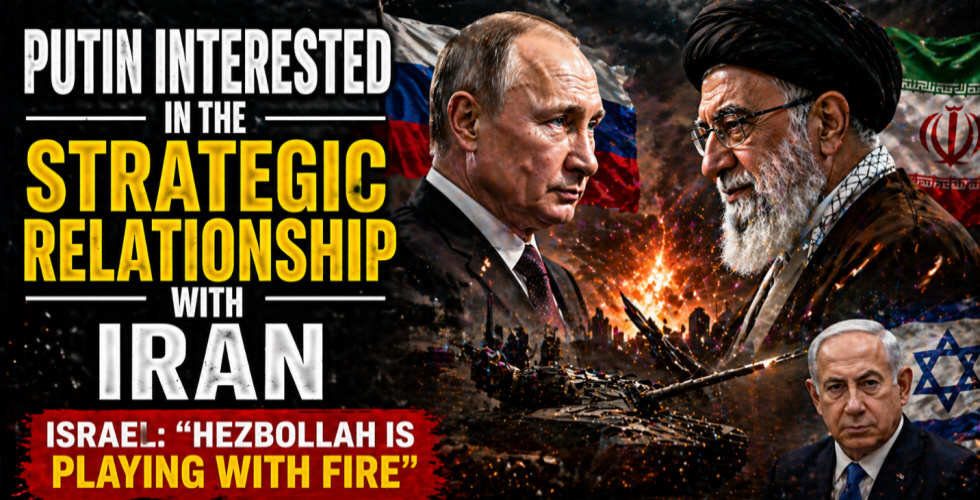
Vladimir Putin has once again placed Russia at the center of the geopolitical chessboard in the Middle East by reaffirming his interest in maintaining a strong strategic relationship with Iran. During his meeting with Iranian Foreign Minister Abbas Araqchi, the Russian president made it clear that Moscow considers Tehran a key partner in a region marked by permanent tension. The meeting took place during one of the most delicate moments in the conflict involving Iran, the United States, and Israel. Putin publicly expressed his support for the Iranian people and highlighted the importance of preserving bilateral cooperation amid growing international pressure.
Russia maintains a long-term strategic partnership with Iran that includes energy, defense, trade, and regional diplomatic coordination. In a context of Western sanctions, both countries have strengthened their political and economic ties even further. The Kremlin insists that the solution to the current crisis must be diplomatic rather than military. Moscow has once again offered itself as a mediator in the indirect talks between Washington and Tehran, especially regarding the Strait of Hormuz and global energy stability. For Russia, avoiding an open escalation also means protecting its own regional and economic influence.
The Strait of Hormuz remains one of the most sensitive points on the planet. Any threat to that maritime route immediately affects oil prices and the stability of international markets. Russia understands that a prolonged crisis could deeply alter the global energy balance, affecting both allies and competitors alike. While Moscow supports Tehran through diplomacy, Israel is hardening its language toward Hezbollah and warning of a possible escalation on its northern border. Israeli authorities argue that the Lebanese group is “playing with fire” by maintaining military pressure and allowing movements considered direct threats to national security.
Tension in the region continues to grow. The Israeli government fears that any strengthening of the Iran–Hezbollah axis will increase the risk of a wider confrontation in Lebanon and Syria. Tel Aviv believes Hezbollah does not act independently, but as a strategic extension of Iranian influence in the region. That is why every statement coming from Tehran or Moscow is watched with maximum attention by Israel’s defense establishment. Hezbollah, for its part, rejects the accusations and argues that its position is based on defending Lebanese territory against Israeli operations.
The group maintains a strong political and military base inside Lebanon, which makes any attempt at total disarmament or containment extremely difficult. The border remains one of the most explosive points on the regional map. The United States is watching this triangular dynamic with concern. Washington is trying to maintain pressure on Iran while avoiding a regional war that could drive oil prices even higher and compromise its strategic position. Russia’s indirect participation as a mediator adds another layer of complexity to the conflict and reflects how global competition also passes through the Middle East.
Europe is also following every movement closely, especially because of its energy dependence and the risk of new migration waves if the crisis escalates. Germany, France, and Italy understand that a total rupture between Iran, Israel, and Hezbollah could have immediate economic and political consequences for the continent. Regional stability is no longer a distant issue.
In this scenario, the strategic relationship between Putin and Iran is not just a bilateral alliance, but a central piece in the new balance of international power. Russia seeks to maintain influence, Iran needs support, and Israel demands clear limits on its regional enemies. Between diplomacy, threats, and oil, the Middle East once again becomes the epicenter of global tension.


