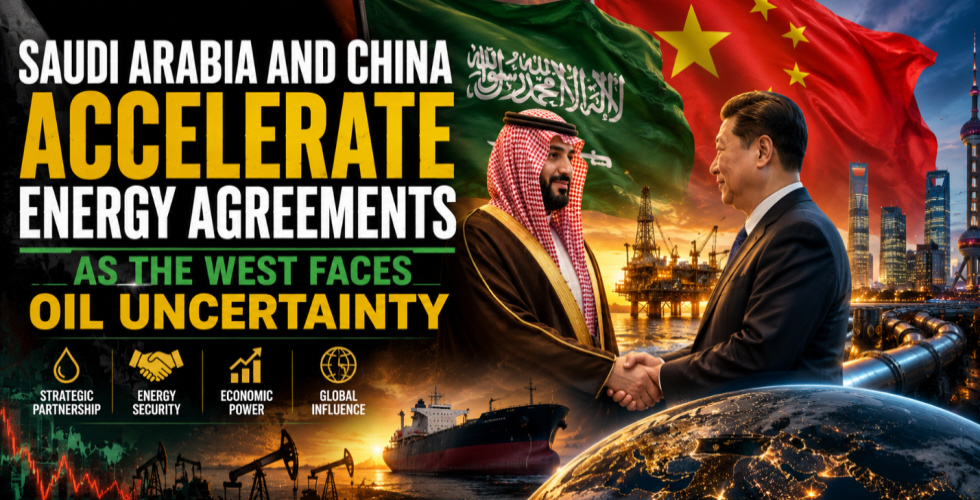
Saudi Arabia and China are accelerating new energy agreements as Western economies face growing concerns over instability in global oil markets. The expansion of this partnership reflects increasingly deep changes in the global economic and geopolitical balance. Analysts believe the growing energy cooperation between both powers could reshape future strategic trade routes worldwide. The new agreements include investments in refining, oil supply, energy infrastructure and technological cooperation linked to both traditional and renewable energy sectors.
Saudi Arabia seeks to strengthen long-term Asian markets, while China aims to guarantee energy security amid rising global tensions. Both nations consider stable energy supply a major strategic national priority. For decades, Western countries maintained enormous influence over international energy markets, particularly through the dollar and traditional Middle Eastern alliances. However, the strengthening relationship between Riyadh and Beijing reflects a far more multipolar international environment. China’s growing presence in strategic energy sectors is generating concern in Washington and other Western capitals. China remains one of the world’s largest energy consumers and requires constant access to oil in order to sustain industrial and technological expansion.
Saudi Arabia, meanwhile, seeks to diversify international partnerships while reinforcing its position as a global energy leader. Both countries believe stronger cooperation can provide long-term mutual economic stability. Global oil uncertainty has intensified due to geopolitical conflicts, trade tensions and fears of future supply disruptions. Financial markets are closely monitoring every move between major energy producers and consumers, especially when long-term strategic agreements are involved. Oil prices continue reacting rapidly to signals of broader global economic shifts.
Another important aspect is the growing debate over the use of alternative currencies in international energy transactions. Some analysts believe China is gradually seeking to expand the use of the yuan in oil agreements to reduce dependence on the U.S. dollar. Although the dollar still overwhelmingly dominates global energy trade, certain developments are beginning to attract serious attention from investors and governments. The relationship between Saudi Arabia and China also carries major geopolitical implications throughout the Middle East.
Beijing has expanded diplomatic and economic presence across the region while maintaining a pragmatic cooperation strategy with multiple international actors. This comes at a time when the United States faces increasing challenges in preserving traditional influence over certain strategic global sectors. International energy companies have started evaluating how these new agreements could affect future investments, trade routes and global supply chains. The global energy transition continues advancing rapidly, yet oil remains essential for transportation, industry and international economic stability.
As a result, any strategic movement involving major energy powers creates immediate reactions in global markets. Specialists believe the world is entering a period of economic realignment where energy, technology and geopolitics are becoming increasingly interconnected. Saudi Arabia is attempting to adapt to a rapidly changing global environment while China strengthens international economic influence through strategic investments.
Western economies are carefully monitoring these developments because of their possible financial and political consequences. The acceleration of energy agreements between Saudi Arabia and China demonstrates that global competition over strategic resources continues intensifying.
As major economies seek to secure energy supply and financial stability, new alliances are beginning to reshape the world’s economic landscape. The outcome could significantly influence markets, currencies and geopolitical balance for decades to come.

