
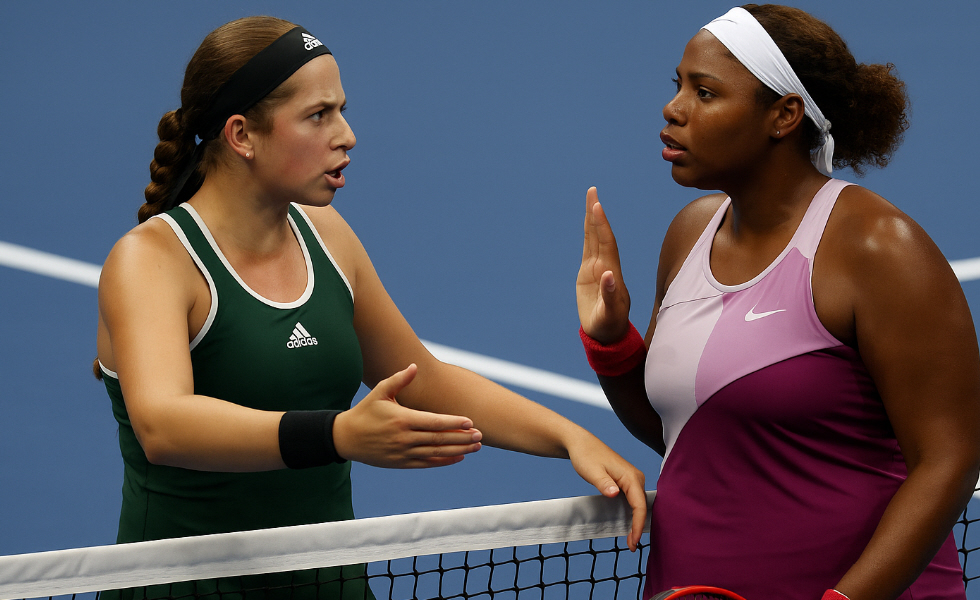
The 2025 US Open witnessed a dramatic and controversial moment during the second round when American Taylor Townsend stunned Latvia’s Jelena Ostapenko, the tournament’s 25th seed, with a straight-sets victory of 7-5, 6-1. Yet the tennis itself was quickly overshadowed by a fiery confrontation during their post-match handshake. Ostapenko, visibly upset, accused Townsend of failing to apologize after winning a crucial point through a “net cord” shot — a ball that clips the net and changes direction unexpectedly.
She called Townsend “classless” and “uneducated” and further criticized her for warming up too close to the net, claiming it violated the unwritten standards of tennis etiquette. Townsend, however, refused to back down. Speaking afterward, she explained that in competitive sports “players get frustrated when they lose and sometimes say things,” but made clear she would not tolerate being insulted, especially regarding her education or manners.
Townsend emphasized that she had acted respectfully throughout the match and suggested that Ostapenko’s remarks reflected frustration more than reasoned criticism. She also acknowledged that, historically, her community has faced negative stereotypes regarding education, though she stressed she did not interpret Ostapenko’s comments as racist in intent. The controversy quickly spread across social media, prompting Ostapenko to issue clarifications.
She denied any racial connotations in her remarks and insisted that her frustrations stemmed purely from perceived breaches of etiquette on the court. The Latvian reiterated that she respected all nationalities and athletes but stood by her criticism of Townsend’s unusual warm-up routine and lack of apology after the net-cord point. Other players weighed in as well. World No. 1 Aryna Sabalenka revealed that she spoke with Ostapenko after the match, expressing concern that the Latvian might be dealing with personal struggles that were impacting her composure on court.
Sabalenka remarked that moments like these remind fans that athletes are human beings facing pressure, stress, and personal challenges that often remain invisible to the public eye. The incident has reignited discussion about tennis etiquette, the boundaries of sportsmanship, and the emotional toll of high-stakes competition. Ostapenko’s outburst joins a long list of Grand Slam controversies where passion, pressure, and raw emotion boil over, leaving a mark on the sport far beyond the result of a single match.
 Boston Celtics
 Denver Nuggets
 Milwaukee Bucks
 Phoenix Suns
 Golden State Warriors
 Los Angeles Lakers
 Miami Heat
 Dallas Mavericks


