
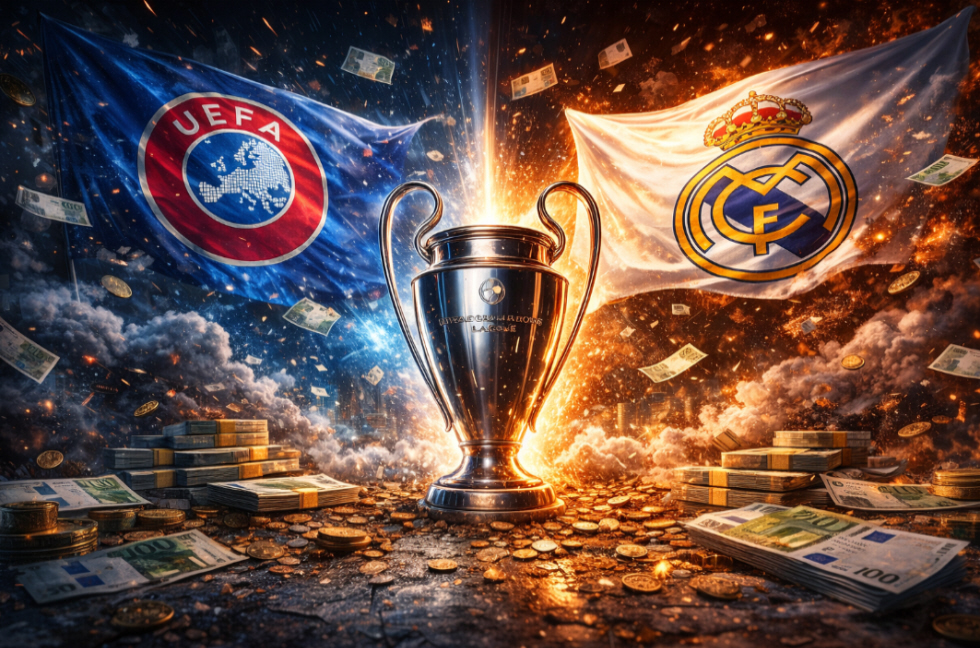
The battle between UEFA and Real Madrid over the Super League was not merely an institutional dispute, but a direct confrontation between two competing visions of power in European football. With an agreement now in place and legal tensions moving toward resolution, the landscape becomes clearer: UEFA retains structural control, while Real Madrid sees its bold reform project fade, at least for now.
For UEFA, the greatest victory is legitimacy. After years of criticism over monopolistic control and centralized authority, it preserves the traditional competition model built on sporting merit. The Champions League remains the core of European club football, maintaining its open structure and historical narrative. UEFA also strengthens its political authority. The threat of a parallel league represented a dangerous precedent that could have fragmented the calendar, divided broadcasting rights, and disrupted the continent’s financial balance.
By closing the dispute, the governing body avoids a structural fracture that might have weakened its influence over clubs, federations, and sponsors. Financially, UEFA emerges reinforced. Its centralized system allows it to continue negotiating global broadcasting and commercial deals without facing direct competition from a privately controlled tournament led by elite clubs. Stability protects both the competitions themselves and the national associations that rely on shared revenues.
For Real Madrid, the outcome is more complex. While the club avoids catastrophic sanctions or international exclusion, it loses momentum in its most ambitious initiative: creating a semi-closed competition that would guarantee fixed revenues for Europe’s biggest teams. The vision of securing long-term economic dominance for the elite is, for now, shelved. However, Real Madrid does not walk away empty-handed.
The pressure applied over the past years forced UEFA to introduce structural reforms to the Champions League, including format expansion and commercial adjustments. In that sense, Madrid influenced the evolution of the tournament, even if not under its own blueprint. There is also a reputational dimension. The Super League triggered resistance from fans, players, and governments, and although the controversy has cooled, the image of breaking away from tradition left a lasting mark.
The club will now need to rebuild its institutional narrative within the existing system. Ultimately, UEFA preserves the structural control of European football and prevents a historic split, while Real Madrid sees its transformative gamble halted but retains significant political weight within the ecosystem.
 Boston Celtics
 Denver Nuggets
 Milwaukee Bucks
 Phoenix Suns
 Golden State Warriors
 Los Angeles Lakers
 Miami Heat
 Dallas Mavericks


