
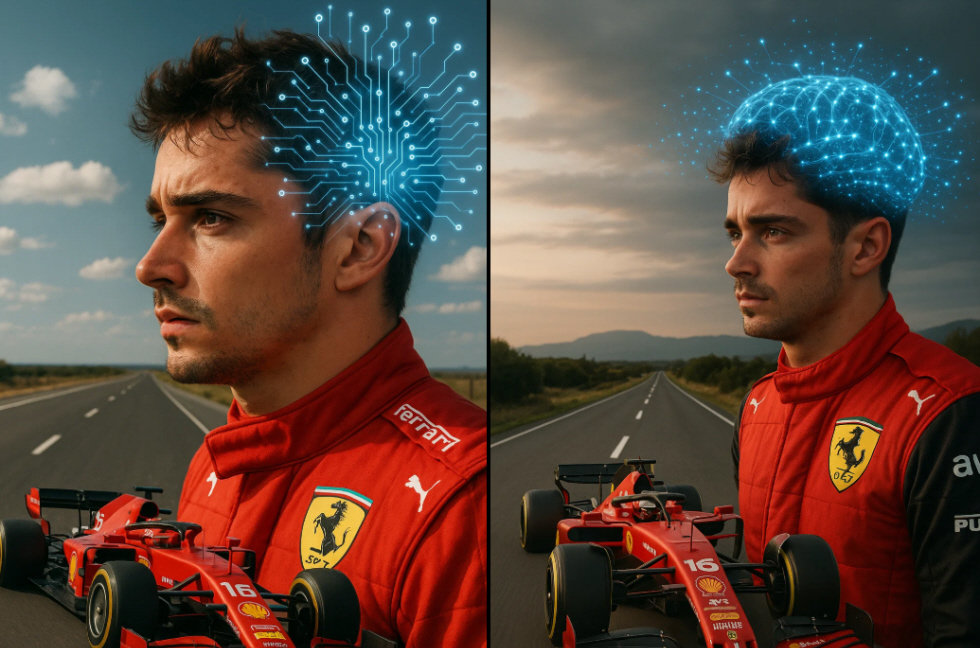
Although Charles Leclerc currently has his eyes set on the Azerbaijan Grand Prix, the Ferrari driver may be at the center of a much larger controversy: an alleged attack on his brain through the theft of neural data. According to recent investigations disclosed by journalist Pablo Torre, China is suspected of having illicitly accessed brain data from several leading figures in international sports, including tennis star Jannik Sinner, ski champion Mikaela Shiffrin, and Leclerc himself.
The alleged source of this data breach is the fitness headband “FocusCalm”, a device used by numerous athletes to monitor brain activity, improve concentration, and optimize physical recovery. According to Torre, the company behind the product, BrainCo, was founded in the United States but has been receiving funding from the Chinese Communist Party for roughly a decade and more recently is said to have relocated its headquarters to China.
This connection, the journalist claims, may have given Beijing access to data of significant strategic value. The report suggests that China is using this information to develop training programs aimed at creating what it calls the “soldiers of the future,” by leveraging high-performance neural patterns observed in elite athletes. The accusation has raised concerns in both the sporting and technology sectors, given that brain data is considered one of the most sensitive and hardest to protect in the digital age.
In response to these claims, BrainCo categorically denied any wrongdoing. The company insisted that the data collected by the headband always remains on the user’s device and is regularly deleted, which in theory would make any form of extraction or external manipulation impossible. The company further described the accusations as “unfounded and technically unfeasible.
” The case, however, raises a broader debate about the vulnerability of emerging technologies applied to sports and health. Cybersecurity experts warn that as connected devices gather increasingly intimate information, the risk of espionage and manipulation also grows. For this reason, they stress the urgent need to establish stricter regulatory frameworks to safeguard both athletes and ordinary citizens in the era of neurotechnology.
 Boston Celtics
 Denver Nuggets
 Milwaukee Bucks
 Phoenix Suns
 Golden State Warriors
 Los Angeles Lakers
 Miami Heat
 Dallas Mavericks


