
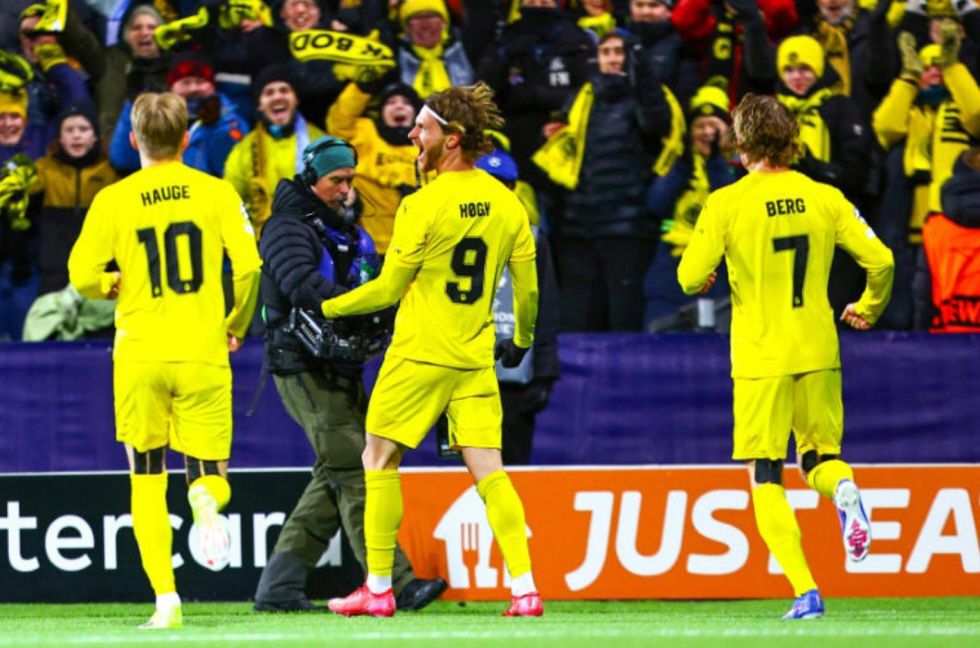
Manchester City suffered one of the most surprising defeats of the current Champions League campaign after falling 3–1 to Bodo/Glimt in Norway, a result that sent shockwaves through European football. Pep Guardiola’s side were outplayed in difficult conditions by an opponent that once again proved that financial power does not always determine outcomes.
The Norwegian team set the tone early and built a decisive advantage in the first half, with Kasper Høgh scoring twice to put the hosts firmly in control. City struggled to find their usual rhythm and were unable to dominate possession or tempo during the opening 45 minutes. After the break, Bodo/Glimt remained disciplined and committed to their game plan. Jens Petter Hauge extended the lead in the second half, sparking celebrations at the Aspmyra Stadion and confirming the home side’s superiority on the night. Manchester City briefly threatened a comeback when Rayan Cherki pulled a goal back, injecting a moment of hope for the visitors. However, any momentum was quickly halted when Rodri was sent off after receiving a second yellow card, leaving City a man down at a critical stage.
The match was played in challenging conditions, with temperatures hovering around minus two degrees Celsius. Located more than 200 kilometers north of the Arctic Circle, the setting added an extra layer of difficulty for the English champions, who never fully adapted. Bodo/Glimt, representing a town of just 55,000 residents, once again defied conventional expectations.
Under the guidance of head coach Kjetil Knutsen, the underdogs ignored the vast financial and squad disparities to deliver a performance defined by intensity, organization, and belief. The Norwegian side had already earned respect in European competition in recent seasons, including a run to the Europa League semifinals and competitive results against established clubs.
Their first appearance in the Champions League group stage has further highlighted a steady and impressive rise. For Manchester City, the defeat serves as a reminder of the unforgiving nature of Europe’s elite competition. For Bodo/Glimt, it marks a historic victory that strengthens their identity and secures their place among the tournament’s most memorable stories.
 Boston Celtics
 Denver Nuggets
 Milwaukee Bucks
 Phoenix Suns
 Golden State Warriors
 Los Angeles Lakers
 Miami Heat
 Dallas Mavericks


