
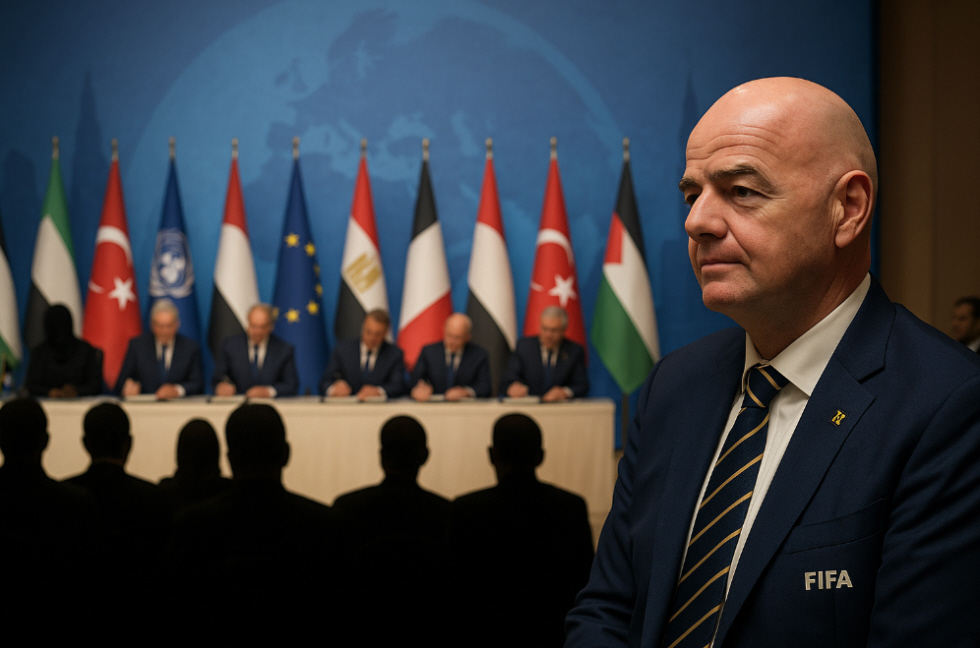
The image raced around the world: heads of state and government endorsing a Middle East peace plan and, among them, Gianni Infantino, FIFA’s president. He didn’t sign, he didn’t negotiate—but he was there. The gesture jarred many observers. The Egyptian daily Al-Masri al-Youm called him “the strangest guest” at the Sharm el-Sheikh summit—a label that captures the unease of seeing football’s top executive at a table built for professional diplomats.
Host Abdel Fattah el-Sisi brought together leaders with real weight on the regional chessboard: Donald Trump as a driver of talks between Israel and Hamas; Qatar’s Emir Tamim bin Hamad Al Thani; Turkey’s President Recep Tayyip Erdoğan; France’s President Emmanuel Macron; and Palestinian President Mahmoud Abbas, among others. In that context of bargaining and guarantees, Infantino’s presence worked as a symbol: sport as soft power, cultural bridge, and global amplifier.
Symbols, however, have edges. FIFA preaches neutrality; when its chief steps into a high-voltage political frame, he inevitably takes a side in public perception, even if his role is marginal. For critics and fans alike, the question is obvious: how far can football go without diluting its independence? Where does the promotion of universal values—dialogue, fair play, coexistence—end and instrumentalization begin? Infantino is no stranger to these stages.
For years he has frequented political forums and multilateral summits, convinced that football “opens doors where diplomacy cannot.” The bet can add visibility and momentum to humanitarian causes, yes; it can also expose the organization to controversies far from the field. The balance is delicate: a public-relations goal if peace advances; an own goal if the photo becomes a souvenir of a summit without results.
For now, Sharm el-Sheikh leaves a scene both potent and ambiguous: leaders negotiating, cameras rolling, and an unexpected guest reminding us that football is also politics by other means. Whether that prominence helps bridge positions or merely adds noise will be decided in the next chapters of the process.
 Boston Celtics
 Denver Nuggets
 Milwaukee Bucks
 Phoenix Suns
 Golden State Warriors
 Los Angeles Lakers
 Miami Heat
 Dallas Mavericks


