
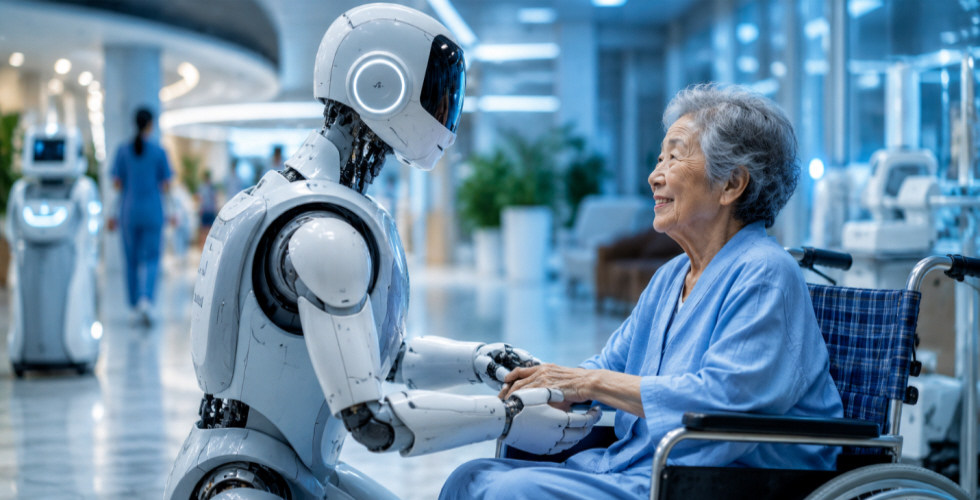
Japan has begun developing a new generation of medical robots designed to assist elderly patients inside hospitals and specialized care centers. The initiative aims to address the country’s rapidly aging population and the growing demand for healthcare services. Experts believe this technology could significantly transform the future of medical assistance and elderly care. The new robots are being designed to help with tasks such as patient monitoring, medication delivery, basic physical assistance and daily support. Some models even use artificial intelligence to recognize emotions, answer simple questions and detect changes in patients’ health conditions.
The goal is to relieve part of the pressure currently placed on doctors and nurses. Japan faces one of the oldest populations in the world while the number of available healthcare workers continues gradually declining. Because of this situation, hospitals and government authorities have started searching for technological solutions capable of complementing human healthcare services. Medical robotics is emerging as one of the country’s main strategies for addressing this demographic challenge. Specialists explain that these robots are not intended to completely replace healthcare professionals, but rather assist with repetitive and routine support tasks.
Thanks to advanced sensors and intelligent systems, the machines can help move patients, monitor vital signs and quickly alert staff in case of medical emergencies. This could improve both hospital efficiency and patient safety. Some Japanese hospitals have already begun pilot programs using robotic assistants in geriatric departments and specialized elderly care centers. Early results show reduced workload for nurses and increased capacity for constant monitoring of vulnerable patients. Researchers continue refining human interaction systems and improving technological precision within these medical robots.
Artificial intelligence also allows certain robots to learn individual patient routines and personal healthcare needs. Through behavioral analysis and continuous monitoring, the machines can adapt responses according to medical conditions and daily habits. This level of personalization represents one of the most advanced aspects of Japan’s emerging healthcare technology.
However, the expansion of medical robotics is also generating ethical and social debates regarding human interaction and technological dependence. Some specialists warn that emotional care remains a fundamental part of elderly healthcare and cannot be fully replaced by machines. Others believe technology can successfully complement human caregivers and improve quality of life for millions of elderly people.
Despite these discussions, Japan continues leading global development in robotics applied to healthcare and human assistance. Researchers believe that during the coming decades, intelligent hospitals will combine doctors, nurses and artificial intelligence working together. What once seemed like futuristic science fiction is slowly becoming part of modern medicine.

