
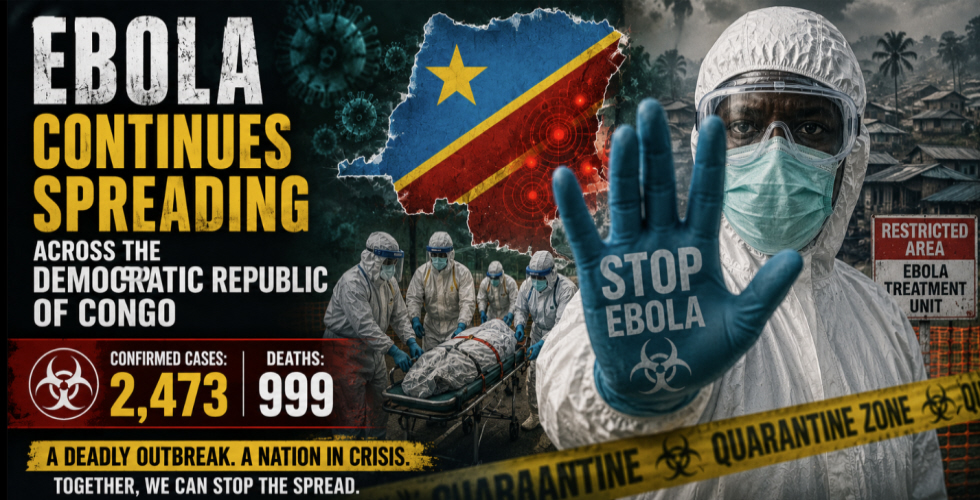
The Democratic Republic of the Congo is facing one of its most serious public health emergencies in recent years as the Ebola outbreak continues to expand. Authorities have confirmed 2,473 cases and 999 deaths, while health officials intensify efforts to contain an epidemic that continues spreading across several regions of the country. The eastern provinces remain the hardest hit by the outbreak, with new infections being detected almost daily and placing increasing pressure on hospitals and emergency treatment centers.
Medical response teams continue working around the clock to care for patients and slow the spread of the virus. Health experts believe the actual number of infections could be significantly higher than official reports indicate. Limited access to remote communities, ongoing armed conflicts, and weak healthcare infrastructure make it difficult to identify and monitor every suspected case. Ebola remains a highly dangerous disease transmitted through direct contact with the bodily fluids of infected individuals. Because the illness can progress rapidly, health authorities continue enforcing strict isolation procedures and intensive epidemiological surveillance to reduce transmission.
One of the greatest challenges facing this outbreak is that it involves the Bundibugyo strain of the Ebola virus, for which there is currently no widely approved vaccine or specific treatment. While scientific research continues, prevention remains the most effective tool for limiting infections. Public health teams are conducting extensive contact tracing, patient monitoring, and community education campaigns in the most vulnerable areas. Their primary objective is to detect new infections as early as possible and prevent the virus from reaching additional communities. Security conditions present another major obstacle to controlling the epidemic.
In several affected regions, healthcare workers face serious challenges reaching remote populations because of violence, instability, and limited transportation infrastructure. The growing number of confirmed cases continues placing enormous pressure on the country's healthcare system, where hospitals and specialized treatment centers are operating under extremely difficult conditions. Doctors, nurses, and emergency personnel remain on the front lines of the crisis while providing life-saving care.
The international community continues supporting the response through medical supplies, specialized personnel, and logistical assistance aimed at strengthening local healthcare capabilities. At the same time, researchers continue working to develop more effective vaccines and treatments capable of combating this particular Ebola strain.
Although health authorities remain hopeful that the outbreak can eventually be brought under control, the steady increase in infections demonstrates that significant challenges remain. Early detection, rapid isolation of new cases, strong community cooperation, and continued international support will be essential to slowing the spread of Ebola and reducing the human impact of this major public health emergency.

