
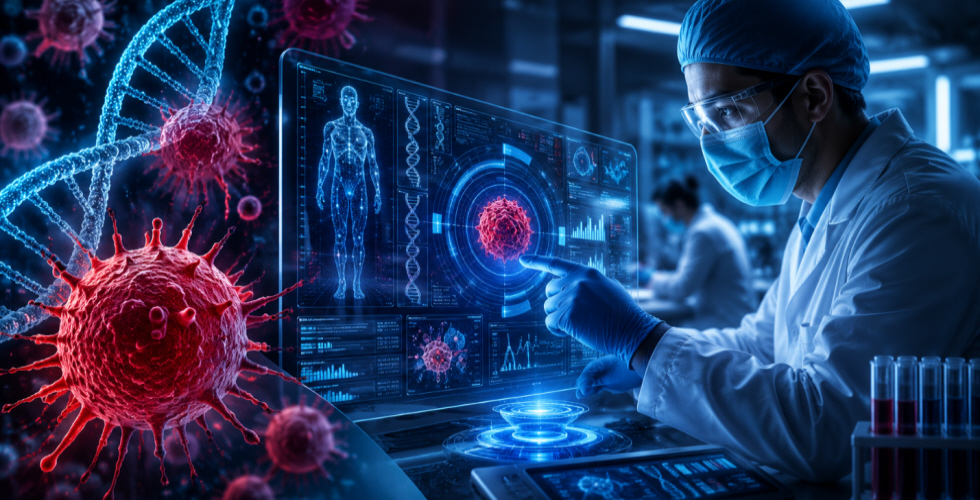
Scientists and medical centers across multiple countries have begun developing personalized cancer treatments using artificial intelligence to analyze millions of medical records in record time. The new technology aims to design therapies specifically adapted to each patient’s body and genetic characteristics. Specialists believe this innovation could completely transform the future of modern oncology. Artificial intelligence allows researchers to analyze DNA, medical history, clinical images and previous treatment responses with a speed impossible for traditional methods.
Through advanced algorithms, these systems can identify complex patterns that help doctors select more precise and effective therapies. This could significantly increase survival rates among patients with different forms of cancer. In United States, laboratories, hospitals and technology companies are investing billions of dollars into AI-based medical research. Several pharmaceutical corporations are already working alongside machine learning specialists to develop new personalized medicines. Competition to lead the future of medicine is accelerating rapidly worldwide.
One of the main goals is reducing severe side effects associated with traditional treatments such as chemotherapy and radiation therapy. By customizing therapies according to individual biological characteristics, doctors hope to target cancer cells more precisely while causing less damage to the rest of the body. This represents one of the greatest current hopes in oncology research. Specialists explain that every type of cancer possesses different genetic behaviors even among patients with similar diagnoses. Artificial intelligence helps identify invisible differences through large-scale biomedical data analysis and advanced molecular studies.
Because of this, personalized medicine is gradually replacing generalized treatments used for decades. Another major advantage is the speed at which AI systems can process international scientific research and clinical trial results. What previously required years of manual analysis can now be completed far more quickly using automated intelligent learning platforms. This could dramatically accelerate medical discoveries and future therapies for complex diseases. However, the rapid expansion of these technologies is also generating ethical debates involving genetic privacy and unequal access to advanced treatments.
Experts warn that AI-based medicine may initially benefit mainly wealthy countries and hospitals with greater financial resources. International organizations are calling for regulations that guarantee broader and safer patient access.
Despite these challenges, researchers believe the combination of artificial intelligence and personalized medicine represents one of the most important scientific advances of recent decades. The possibility of designing treatments specifically for each individual opens a new stage in the global fight against cancer. What once seemed like science fiction is slowly becoming a medical reality.