
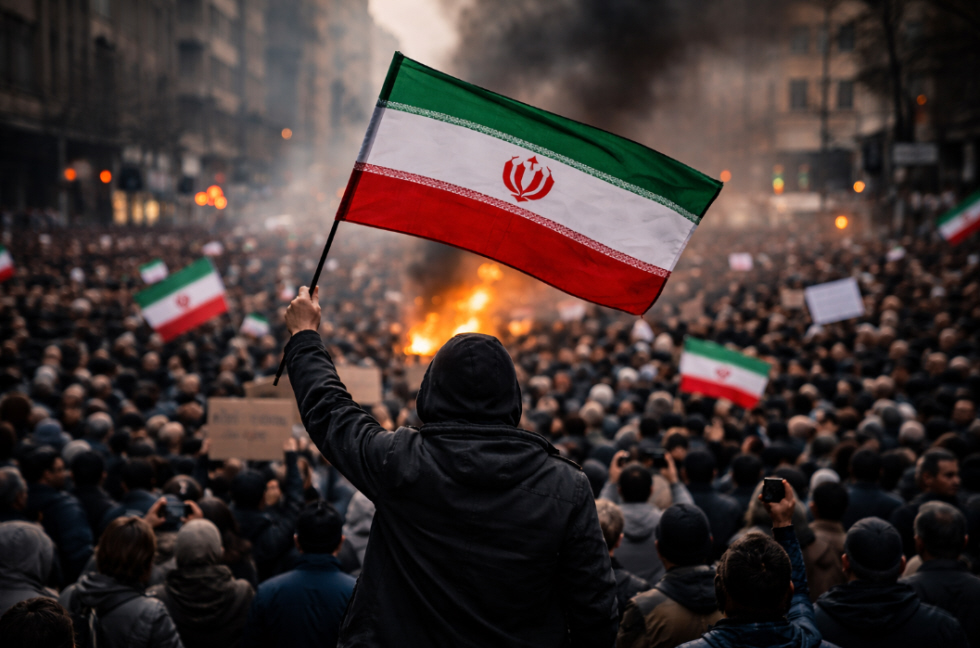
Iran is living through one of the most delicate moments in its recent history. Thousands of people have reportedly been killed since protests against the regime erupted, yet despite the scale of repression and the visible erosion of power, the country still lacks a widely recognized opposition figure capable of channeling popular discontent into a concrete political alternative. The problem lies not only in the strength of the state apparatus but also in the deep fragmentation of the opposition.
No inclusive organization has emerged that can unite Iranians from different religious, ethnic, and socioeconomic backgrounds under a shared political project. This structural weakness is not new and traces its roots to divisions that predate even the 1979 Islamic Revolution. Much of the most visible opposition operates outside Iran. In exile, debates are intense and positions are rigid. However, this dynamic does not necessarily translate into real influence inside the country, where repression, fear, and the absence of coordination limit the possibility of sustained and organized mobilization.
Among the best-known groups are the monarchist supporters of Reza Pahlavi, son of the last shah, and the People’s Mujahedin of Iran (MEK), a movement that blends leftist and Islamist ideas. Both carry controversial histories and symbolic baggage that continue to generate rejection among broad segments of Iranian society, making it difficult for them to emerge as widely accepted political options. Pahlavi, who lives in the United States, has intensified his calls for mobilization in recent years and benefits from significant media platforms broadcasting to Iranian audiences.
While his appeals have had some impact, opinions remain divided over his ability to lead a transition from abroad and without a solid organizational base inside the country. The MEK, for its part, remains a deeply polarizing force. Its past, marked by armed confrontations and controversial alliances, still weighs heavily on the collective memory. For many Iranians, the historic conflicts between monarchists and former revolutionary movements feel disconnected from today’s demands, which focus on profound change rather than the restoration of old power structures.
Recent protests reflect a clear demand for comprehensive change, not merely reforms within the Islamic Republic. Yet that demand runs up against the absence of an opposition structure capable of articulating credible leadership from within the country. Social energy exists, but it lacks political direction. Meanwhile, the international community watches cautiously. Without a clear interlocutor and without a cohesive opposition, any transition scenario remains uncertain. Iran thus faces a defining paradox: a regime increasingly questioned and a mobilized society, but no clear path toward a political alternative capable of turning protest into real power.
By:
Williams Valverde.

