
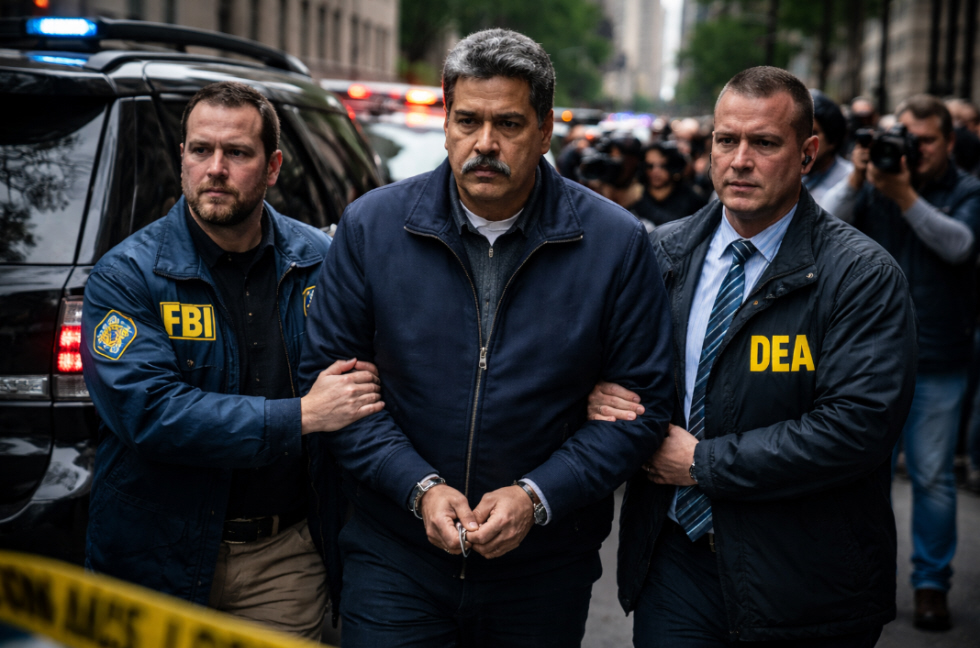
Over the past months, Nicolás Maduro had multiple opportunities to leave power through diplomatic means. Different governments, international mediators, and discreet back channels explored negotiated exits that could have avoided a violent rupture and a judicial outcome. None of those efforts succeeded. Maduro chose to stay, ignore repeated warnings, and close every possible door to a negotiated transition.
According to political sources and international media reports, an exile proposal was even placed on the table, allowing him to leave Venezuela without immediately facing trial. Turkey was mentioned as a possible destination, with guarantees of personal safety and a comfortable life away from politics. It was not an act of generosity, but a pragmatic solution to prevent further escalation.
Maduro not only rejected that option but openly mocked it. Instead of showing any willingness to negotiate, the then Venezuelan leader adopted a defiant posture. His televised appearances, provocative gestures, and public disdain toward Washington reinforced the perception that there was no remaining space for diplomacy. Within the U.S. government, the belief solidified that Maduro was no longer receptive to dialogue under any circumstances. In that context, the United States gradually closed every diplomatic avenue. Sanctions, international isolation, and repeated warnings failed to alter the regime’s behavior.
From Washington’s perspective, the issue ceased to be merely political and became a matter of justice and national security, particularly due to accusations related to drug trafficking and the manipulation and trafficking of weapons with direct impact on U.S. interests. The capture of Nicolás Maduro and his transfer to the United States to face federal charges was not an impulsive act or a sudden decision. In the logic of the U.S. government, it represented the last remaining option after all other alternatives had failed. When diplomacy is systematically rejected, states resort to the instruments they consider legitimate to protect their interests and enforce the law.
Today, Maduro faces justice in a federal court, charged with serious crimes related to drug smuggling and weapons manipulation. This outcome cannot be understood as a simple political move, but rather as the direct consequence of a series of personal decisions: rejecting exile, dismissing negotiation, and underestimating his principal international adversary.
As a media outlet, it is necessary to say this clearly, even if it makes some uncomfortable and pleases others: this was not the first option, nor the second, nor the third. It was the result of systematically closing every possible exit. Venezuela’s recent history shows that in international politics, ignoring diplomatic solutions often leads to far harsher endings.
By:
Williams Valverde


