
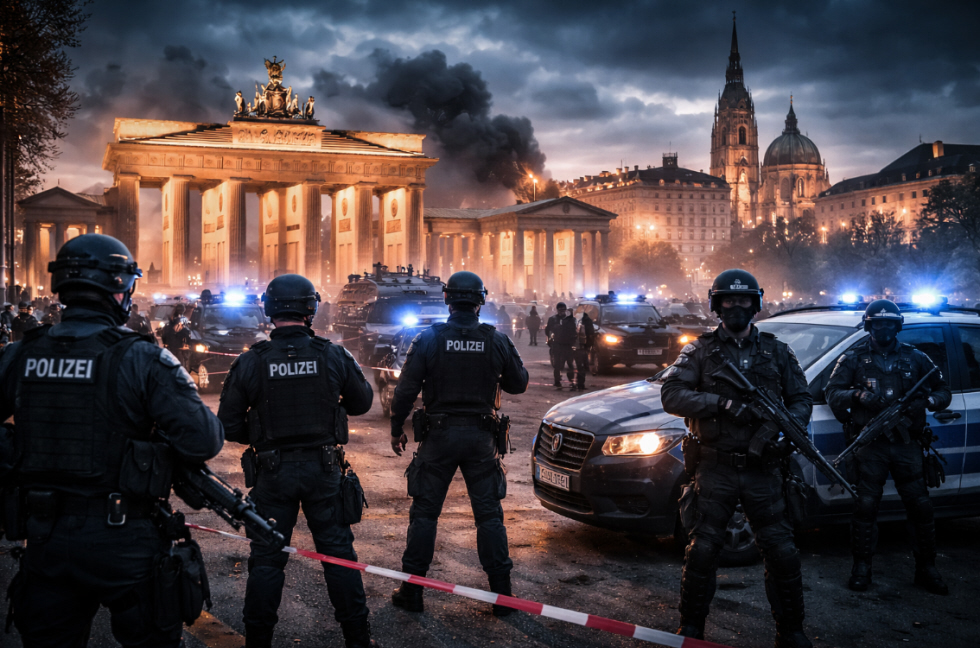
Security authorities across several European capitals have raised their alert levels amid growing concerns about potential retaliation linked to the current conflict involving Iran. From Vienna to Berlin, intelligence services are closely monitoring developments as tensions in the Middle East continue to escalate. The heightened concern follows strong statements from Iran’s leadership calling for revenge after the deaths of senior clerical and military figures during recent attacks in the region.
While such rhetoric may appear distant to the public, European security officials view the situation as a potential risk that cannot be ignored. For many years, European intelligence agencies focused primarily on extremist Sunni organizations when assessing terrorism threats. Groups such as ISIS and al-Qaeda were considered the main sources of danger to European stability. However, analysts believe that the geopolitical landscape may now be shifting.
The growing confrontation surrounding Iran could influence other networks or ideological movements that were previously considered less active within Europe. Security experts warn that the current conflict may inspire individuals or groups motivated by political or religious loyalty to Tehran. Even indirect calls for retaliation can sometimes trigger isolated acts carried out by sympathizers abroad.
One factor drawing particular attention is the possibility that religious or political messaging from Iran could resonate with radicalized circles outside the region. Such messaging has historically played a role in mobilizing supporters during periods of geopolitical confrontation. Religious decrees, commonly known as fatwas, may also influence how certain groups interpret the conflict. While their meaning varies widely depending on context, analysts say they can sometimes serve as ideological justification for political or militant actions. As a result, intelligence agencies are paying closer attention to networks associated with Shiite political movements.
These groups have traditionally received less focus within European counterterrorism strategies compared to Sunni extremist organizations. Authorities across Europe have increased monitoring around government institutions, transportation hubs, and other sensitive infrastructure. Coordination between intelligence agencies in different countries has also intensified in order to detect potential threats early.
Although there is currently no concrete evidence of imminent attacks, the broader geopolitical climate has prompted security services to adopt a precautionary stance. In a period marked by rising global tensions, even indirect signals are being treated with serious attention by European authorities.


