
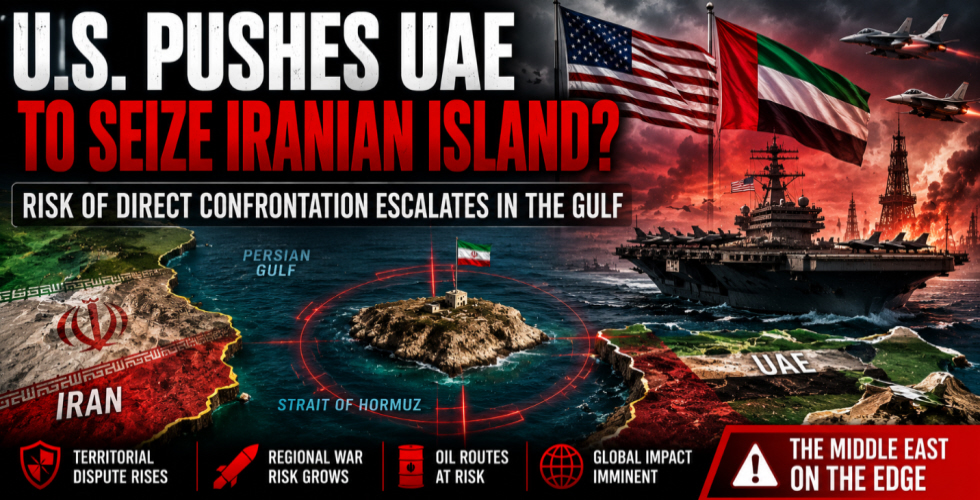
New reports involving alleged discussions between U.S. officials and United Arab Emirates have once again raised tensions across the Middle East. According to circulating accounts, Washington may have encouraged the UAE to take control of an island territorially linked to Iran, increasing fears of a potential direct regional confrontation. The situation is considered especially serious because of the strategic importance of the islands and maritime routes surrounding the Strait of Hormuz.
The area remains one of the world’s most sensitive energy corridors, through which a major portion of global oil and gas supplies continue to pass every day. Although there has been no official confirmation from the governments involved, the emergence of such reports alone has generated concern among international observers. In the Middle East, historical territorial disputes can rapidly evolve into major diplomatic or military crises with global consequences. Regional security analysts warn that any confrontation involving territorial sovereignty could trigger direct escalation between Iran and American-aligned Gulf states.
The continued U.S. military presence throughout the region adds even greater sensitivity to any strategic movement near disputed waters. Over recent years, tensions between Washington and Tehran have already passed through multiple dangerous episodes involving sanctions, maritime security incidents, and indirect military operations. However, an open territorial dispute would elevate the conflict to a far more dangerous and unpredictable level. The possible involvement of the United Arab Emirates also reflects the growing complexity of Middle Eastern alliances.
Abu Dhabi maintains close strategic relations with Western powers while simultaneously attempting to preserve economic stability and energy security inside a region shaped by long-standing rivalries. International observers believe these reports are also part of the broader diplomatic and strategic information war currently surrounding the Middle East. Leaks, rumors, and indirect political messaging are frequently used to test reactions, influence negotiations, and increase geopolitical pressure. Meanwhile, global energy markets continue closely monitoring every development connected to the Persian Gulf.
Even unconfirmed rumors involving territorial disputes can affect oil prices, shipping costs, insurance markets, and overall perceptions of international economic stability. The increasing militarization of several strategic areas across the Gulf has also intensified concerns about possible unexpected incidents. Naval deployments, missile defense systems, and ongoing military exercises continue raising tensions in one of the most geopolitically fragile regions on Earth.
Although the information still remains without definitive verification, the episode once again highlights how fragile the geopolitical balance in the Middle East continues to be. In a region where every strategic movement carries worldwide consequences, even unconfirmed reports can immediately trigger international concern and market instability.


