
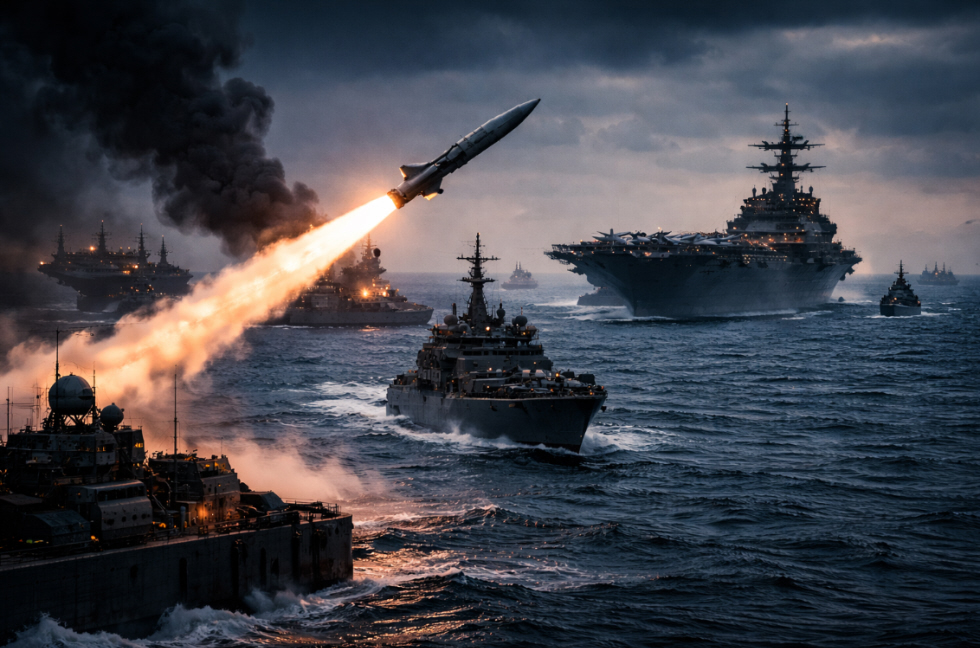
Iran is reportedly moving toward finalizing a military agreement with China to acquire advanced anti-ship cruise missiles, a development that could shift the strategic balance in the Persian Gulf. The potential deal would involve supersonic missile systems with an estimated range of roughly 180 miles, designed to target naval assets at significant distance.
The reported negotiations come at a time of heightened regional tension, with increased military activity and diplomatic strain surrounding Iran’s maritime sphere. Analysts suggest that such weaponry would substantially enhance Tehran’s defensive and deterrence capabilities in strategically vital waters. If completed, the agreement would represent a notable expansion of military cooperation between Iran and China, a relationship that has steadily deepened in recent years through energy, infrastructure, and technology partnerships.
The addition of advanced weapons systems would introduce a new dimension to that partnership. The CM-302 missile system, widely referenced in security circles, is known for its supersonic speed and long-range strike capacity. In a naval confrontation scenario, such capabilities could complicate operational planning for any opposing fleet operating within range. At the same time, the United States has increased its naval presence in key areas of the Gulf, conducting maneuvers and repositioning assets described as precautionary measures.
While no imminent military action has been announced, the buildup has been interpreted by observers as preparation for potential escalation scenarios. The broader context includes last year’s brief but intense regional confrontation involving Iran and Israel, as well as subsequent strikes targeting Iranian nuclear facilities. Those events significantly reshaped security calculations within Tehran’s leadership. Security experts caution that simultaneous rearmament and force deployments heighten the risk of miscalculation. In narrow and heavily trafficked waterways, even a limited incident could rapidly evolve into a larger crisis.
For China, a finalized missile agreement would further solidify its strategic footprint in the Middle East, extending influence beyond trade and energy into defense cooperation. For Iran, the acquisition would reinforce its maritime deterrence posture against technologically superior naval forces. In Washington, policymakers are weighing how to respond to a potential increase in Iranian anti-ship capabilities without triggering direct confrontation.
Some advocate sustained strategic pressure, while others emphasize the importance of maintaining diplomatic channels to prevent open conflict. Amid this evolving landscape, the Gulf region once again finds itself at a sensitive geopolitical crossroads. While no immediate clash has been confirmed, the accumulation of military capabilities and elevated rhetoric continues to draw global attention to the risk of further destabilization.


