
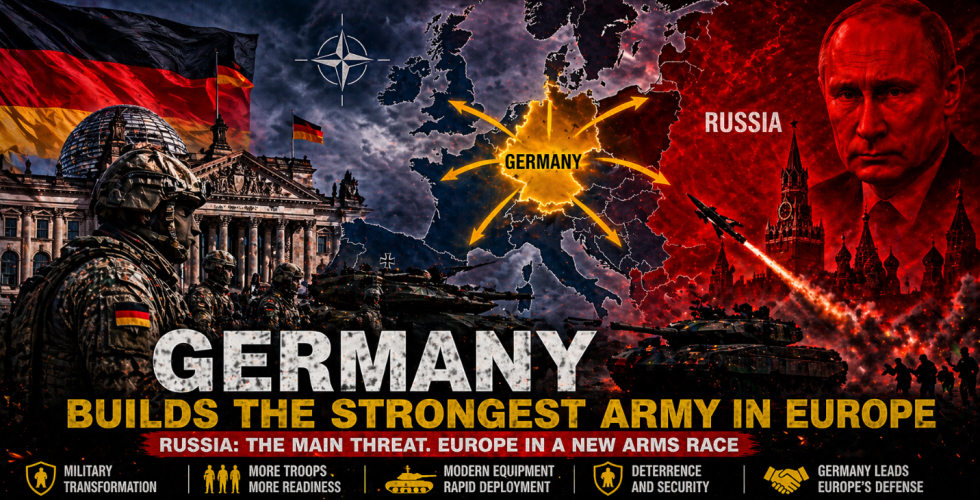
Germany is entering a new phase of military transformation as it accelerates efforts to strengthen its armed forces. The shift reflects growing concern over the evolving security landscape in Europe. Berlin is moving with urgency to reinforce its operational readiness. The message signals a clear strategic pivot. Defense Minister Boris Pistorius has outlined an ambitious goal to elevate the Bundeswehr to a leading position within Europe. The plan includes increasing troop numbers, improving equipment and enhancing rapid deployment capabilities. Officials stress the need for speed in implementation. The objective is to close existing readiness gaps. T
he Bundeswehr has faced years of underinvestment and structural challenges. This new push represents a significant departure from previous limitations. The focus is now on building a force capable of responding to high-intensity conflict scenarios. Modernization is being treated as a priority. At the center of this strategic shift is the perceived threat from Russia. German officials warn that Moscow is expanding its military capabilities and preparing for long-term confrontation. The assessment reflects growing concerns shared across NATO members.
Deterrence has returned to the forefront of European defense policy. Germany, as the largest economy in the European Union, is positioning itself to take on greater responsibility. The move is aimed at strengthening NATO’s eastern flank and reinforcing collective defense. Berlin’s role is evolving from cautious contributor to central pillar of European security. Expectations from allies are increasing. The strategy also emphasizes speed, coordination and long-term sustainability.
Investments in logistics, infrastructure and training are being expanded. Military readiness is no longer viewed as a secondary priority. It is becoming a central element of national policy. At the same time, the broader geopolitical environment adds complexity to Germany’s decisions. Questions about long-term stability in global alliances remain present.
While the strategy avoids direct commentary on alliance uncertainties, the underlying shifts are evident. Europe is preparing to rely more on its own capabilities. As this transformation unfolds, Germany’s military ambitions mark a significant moment for Europe. The push to become a leading conventional force reflects deeper structural changes. The balance of power within the continent is gradually evolving. A new security era is taking shape.


