
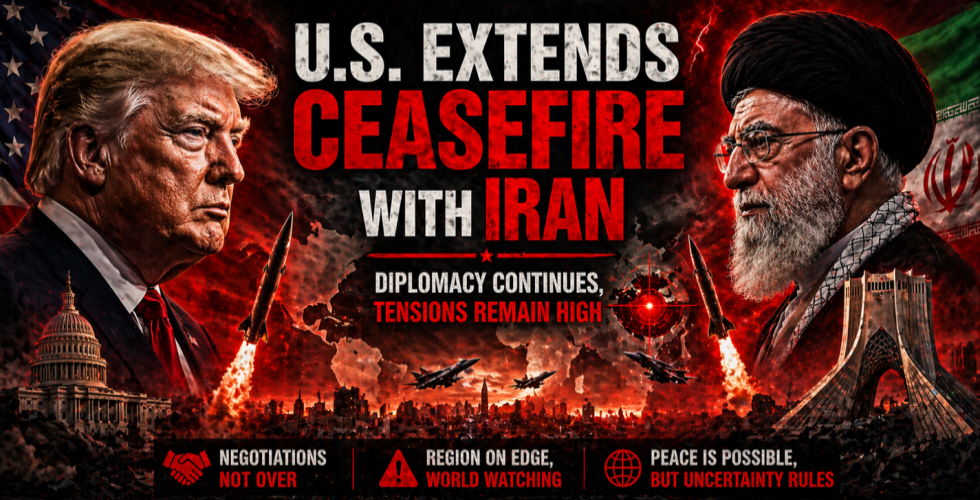
The United States has moved to extend its fragile ceasefire with Iran, signaling an attempt to keep diplomatic channels open amid rising tensions. The decision reflects a strategic effort to prevent immediate escalation while creating space for renewed negotiations. However, the move has been met with skepticism from key Iranian institutions. The situation remains highly volatile. Iran’s Islamic Revolutionary Guard Corps has responded with a firm display of military readiness. Officials emphasized that their forces remain at peak operational capability. Strong warnings were issued, suggesting that any hostile action would trigger a powerful response.
This messaging underscores the persistent risk of confrontation despite ongoing diplomatic efforts. Within Iran’s political structure, reactions to Washington’s decision have been cautious and divided. Some officials view the extension of the ceasefire as a tactical maneuver rather than a genuine step toward peace. Deep mistrust continues to shape Tehran’s perspective on U.S. intentions. This lack of confidence complicates any potential progress. At the same time, uncertainty surrounds the future of negotiations expected to take place in Pakistan.
While diplomatic channels remain open, there is no clear confirmation that both sides are fully committed to returning to the table. The absence of firm guarantees highlights the fragility of the current process. Momentum remains uncertain. On the U.S. side, internal consultations appear to be ongoing at the highest levels. Senior officials are carefully assessing the strategic implications of the next steps. The decision-making process reflects the complexity of balancing pressure with diplomacy. Maintaining leverage remains a central priority for Washington. Iranian negotiators have indicated conditional openness to further talks, but only if the broader approach from the United States shifts.
The emphasis remains on reducing pressure and avoiding coercive tactics. These conditions represent a significant hurdle for any diplomatic breakthrough. The gap between positions remains wide. The broader geopolitical environment continues to influence the dynamics between both nations. Regional instability and global economic concerns add layers of urgency to the situation. Energy markets and international actors are closely monitoring developments.
The outcome carries implications far beyond the immediate conflict. As both sides navigate this delicate phase, the balance between diplomacy and deterrence remains unresolved. The extension of the ceasefire offers a temporary pause, but not a solution. The coming steps will determine whether tensions ease or intensify further. The global stage remains on high alert.


