

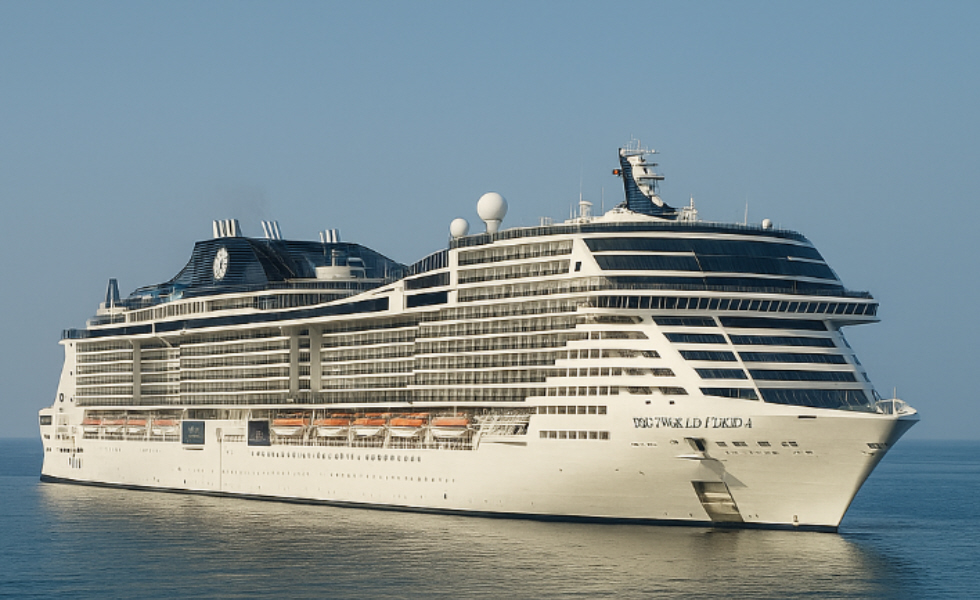
The MSC World Europa cruise ship, one of the largest tourist vessels in the world, suffered a serious electrical failure in its propulsion system while traveling the route between Genoa and Naples, forcing its journey to come to a complete halt in the Mediterranean Sea, approximately 15 nautical miles south of the Neapolitan coast. The breakdown left more than 8,500 people on board, including passengers and crew, stranded for several hours awaiting assistance.
The situation raised concern in Italy as well as in other European countries, as among the passengers were hundreds of foreign nationals, including groups from Malta. According to initial reports, the failure affected the ship’s main power supply, which temporarily disabled the cruise’s engines and triggered safety alarms. Although no injuries or serious incidents were reported, Italian maritime authorities immediately deployed powerful tugboats to assist the vessel and bring it back to a safe port.
MSC Cruises issued a statement assuring that passengers’ safety was never at risk, while explaining that backup systems functioned properly and guaranteed the continuity of basic services on board such as water, ventilation, and food.
However, the company acknowledged that the situation represented a major logistical challenge given the sheer number of people on board. In the hours following the incident, the Italian Coast Guard maintained a monitoring operation in the area, coordinating with the ship’s crew and tugboats to oversee the transfer.
At the same time, several passengers’ relatives took to social media to express concern about the lack of immediate information regarding the state of the cruise ship and its occupants.
This episode adds to a series of recent issues affecting the cruise industry in Europe and has reignited the debate over the vulnerability of these massive vessels that transport thousands of tourists, as well as the need to strengthen safety and maintenance protocols to prevent large-scale failures at sea.
For now, the MSC World Europa is expected to be towed to a nearby port for technical inspections and repairs, while the company evaluates alternatives for either resuming the voyage or repatriating passengers to their countries of origin.


