
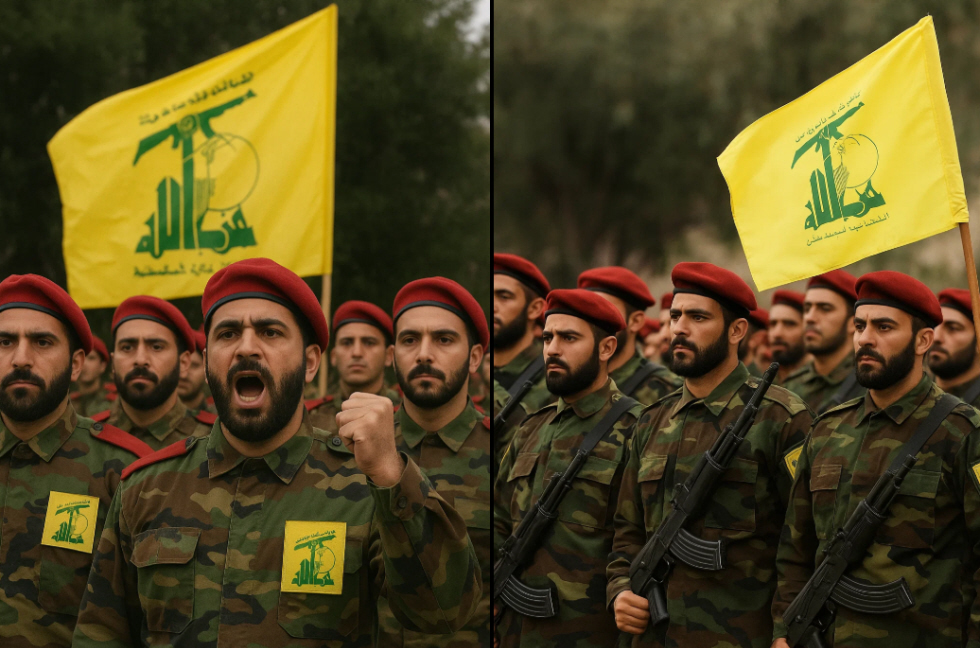
The Lebanese government has formally announced its intention to disarm the Hezbollah militia, marking one of the most delicate political and military moves in the country’s recent history. The announcement comes at a time of heightened regional tension, fueled by the war in Gaza and escalating clashes along the Israeli-Lebanese border. Since the start of the Gaza conflict, Hezbollah has launched multiple rockets into Israeli territory, prompting a massive response from the Israeli military that included airstrikes and, eventually, a ground offensive in southern Lebanon.
Lebanese Information Minister Paul Morcos stated that the specific details of the disarmament plan would remain classified for security reasons, though he acknowledged that the Lebanese army’s capabilities are limited in terms of logistics, equipment, and personnel. According to Morcos, the military will attempt to bring weapons under state control “within the framework of available capacities,” stressing that the process will be gradual and face many obstacles.
The cabinet’s decision triggered immediate tensions within the government. Five ministers aligned with Hezbollah walked out of the meeting in protest just as Army Chief Rodolph Haikal was preparing to present the plan designed to place all weapons under state authority. Their departure highlighted the country’s deep internal divisions and underscored the difficulties of implementing an effective disarmament program.
It is worth recalling that in early August, the Lebanese cabinet accepted a U.S.-backed proposal calling for the complete disarmament of all militias by the end of the year. In November, a ceasefire agreement was reached that required Hezbollah’s withdrawal from the border zone with Israel, beyond the Litani River, and the dismantling of its military bases.
However, Israel continues to accuse Hezbollah of remaining militarily active in the area and has justified ongoing strikes on militia targets as a result. Hezbollah, regarded by supporters as a resistance force and by critics as a “state within a state,” has already declared it will ignore the government’s decision to disarm. Backed militarily and financially by Iran, the group has maintained a decisive influence in Lebanese politics for years, blocking institutional processes and consolidating parallel structures of power.
Still, following the war with Israel last autumn, Hezbollah is seen as militarily weakened, which some analysts believe opens a window of opportunity for the central government. Even so, local reports indicate that the militia may be willing to negotiate a partial or gradual disarmament if Israel halts its operations in Lebanon and withdraws the troops that remain in the country’s south.
Hezbollah remains the only militia that retained its arsenal after the end of the Lebanese civil war in 1990, a fact that has fueled decades of political and military tension. The future of the disarmament plan remains uncertain. For some analysts, it represents a historic step toward restoring the sovereignty of the Lebanese state; for others, it is a monumental challenge that could ignite new internal divisions and renewed violence. What is certain is that in a Lebanon already marked by economic, political, and social crises, the resolution of Hezbollah’s military role will be decisive for the stability of the entire Middle East.


