
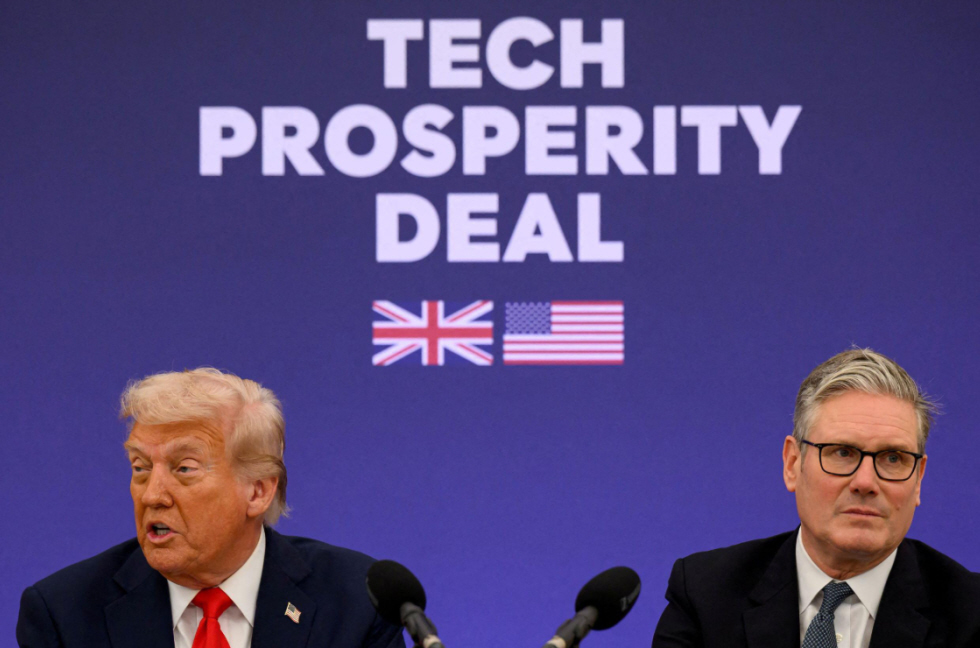
The United States has decided to freeze the implementation of a technology agreement with the United Kingdom valued at approximately $40 billion, highlighting growing differences between the two allies over digital regulation and food standards. The suspension was confirmed by British government officials, who acknowledged that Washington has paused progress on the deal while reviewing regulatory and commercial issues considered sensitive from a US perspective.
A spokesperson for British Prime Minister Keir Starmer declined to provide specific details about the negotiations but emphasized that relations with the United States remain strong. “We remain in active discussions,” the spokesperson told reporters, noting that such negotiations are inherently complex and that it is natural for countries to prioritize their own national interests.
The British government stressed that dialogue is ongoing and that reaching agreement in strategic areas requires time and careful coordination. The agreement, known as the “Technology Prosperity Agreement,” was reached during US President Donald Trump’s state visit to the United Kingdom in September and was intended to deepen bilateral cooperation in key sectors such as artificial intelligence, quantum computing and civil nuclear energy. As part of the framework, major US technology companies including Microsoft, Google, Nvidia and OpenAI had pledged to invest tens of billions of dollars in the United Kingdom, making the deal a cornerstone of Britain’s long-term technology and economic strategy.
The decision to put the agreement on hold comes amid a broader backdrop of delicate trade negotiations. In May, the United Kingdom became the first country to reach a preliminary understanding to reduce certain US tariffs, although implementation has progressed slowly. Last week, British Trade Secretary Peter Kyle traveled to the United States for meetings with trade officials and technology executives in an effort to ease differences and keep talks moving forward.
Both governments have indicated that discussions will continue in the coming months, suggesting that despite the current pause, the agreement remains a key element of the evolving economic and technological relationship between the United States and the United Kingdom.


