
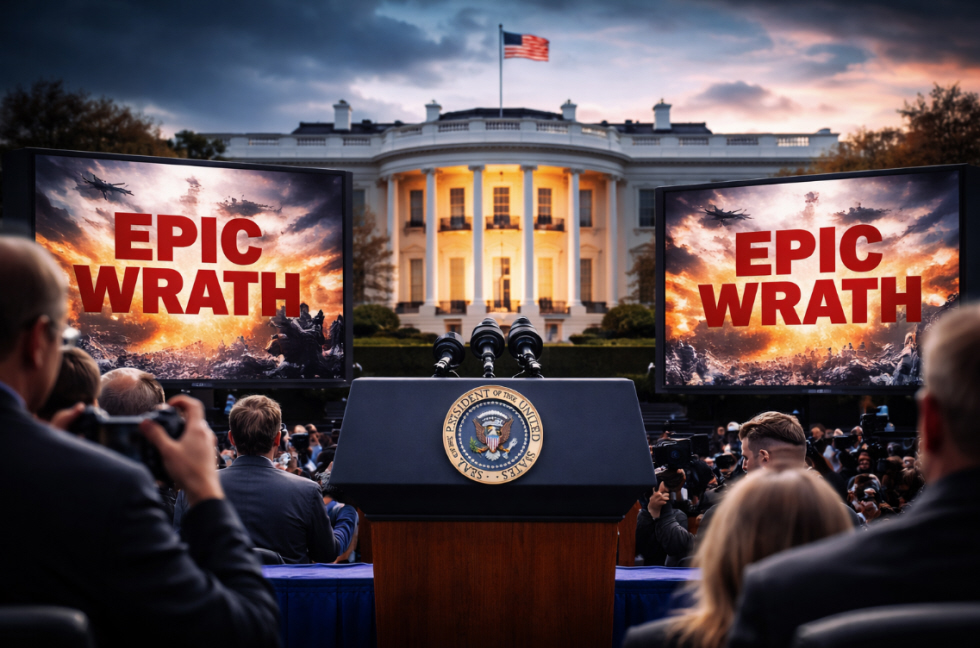
The military operation known as “Epic Wrath” has sparked an intense political debate in Washington. As more details about the scope of the action emerge, different explanations are being offered by various sectors of the U.S. government. The narrative surrounding the operation appears to shift frequently, reflecting both the complexity of the situation and the political sensitivity of the moment. Officials within the administration have presented several reasons for launching the operation.
Some have described it as a strategic response to emerging threats and an attempt to send a clear signal to adversaries in the region. However, the absence of a single consistent explanation has fueled questions among policymakers and observers. One of the most controversial aspects of the debate centers on how the operation should be officially described.
The White House has begun referring to the incident as a “major combat action,” a carefully chosen term intended to acknowledge the scale of the operation without formally labeling it a war. That wording has sparked discussion among political analysts and lawmakers. Some argue that the terminology reflects an effort to avoid legal and political consequences that could arise if the situation were formally classified as a war under U.S. law. President Donald Trump had previously used more direct language when discussing the situation.
In earlier remarks, he referred to the developments as a war, a statement that quickly triggered reactions from political leaders, analysts, and media organizations. The difference between these descriptions highlights a familiar tension in American foreign policy. Governments often attempt to maintain strategic flexibility while avoiding the political commitments that accompany more definitive military declarations. Members of Congress have also begun raising questions about the precise nature of the operation.
Several lawmakers are calling for greater transparency regarding its objectives, its potential duration, and the broader strategy behind the military action. Experts in Washington note that the debate over terminology is not merely semantic. The way a military operation is defined can carry significant legal, financial, and diplomatic implications for the United States.
At the same time, the administration appears eager to project stability and strategic control during a period of heightened global tension. Officials continue to frame the operation as part of a broader effort to defend American interests and strengthen national security.
As discussions continue in Washington, it is clear that the meaning and consequences of “Epic Wrath” will remain a topic of political and strategic debate. What began as a specific military action is now evolving into a larger conversation about the direction of U.S. policy and its role in an increasingly unstable international environment.

