
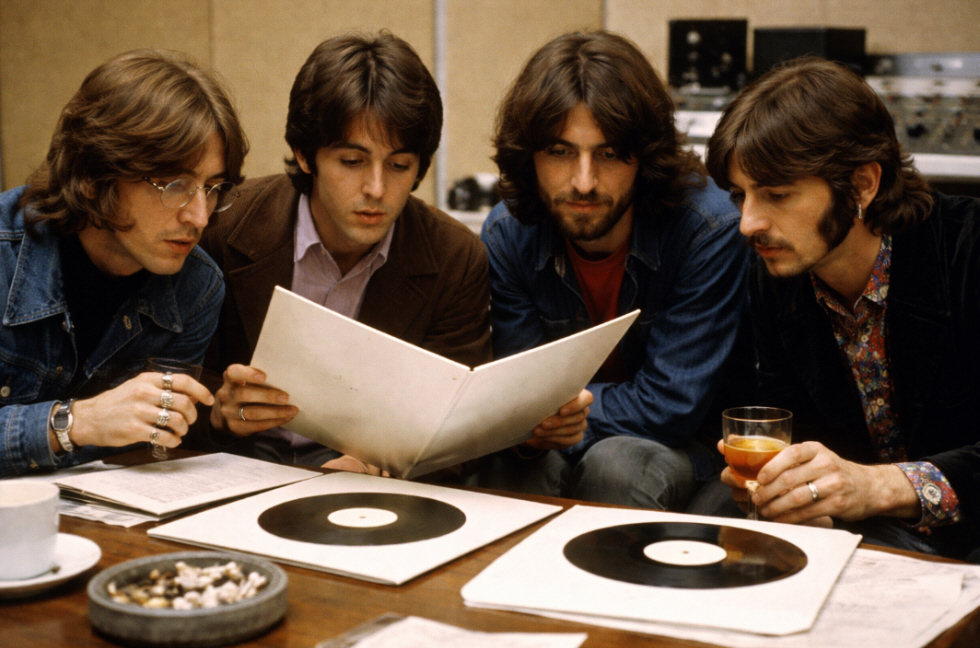
In 1968, The Beatles had moved far beyond the cheerful pop image that first defined them. What began as tightly crafted melodies and polished harmonies had evolved into something far more complex, reflecting not only musical ambition but also a changing cultural landscape. Following the groundbreaking success of Sgt. Pepper’s Lonely Hearts Club Band in 1967, the band entered a period of creative exploration with fewer boundaries.
Experimentation was no longer an exception but the driving force behind their work, pushing them toward sounds and structures that challenged both audiences and themselves. That creative freedom reached a defining moment with the release of their self-titled 1968 album, commonly known as The White Album. Rather than presenting a unified concept, the record revealed a striking diversity of styles, moods, and ideas, mirroring the growing individualism within the group. Each member brought distinct musical instincts into the studio, resulting in an eclectic collection that ranged from delicate ballads to raw, aggressive compositions.
The album captured The Beatles at a moment when collaboration and personal expression coexisted in uneasy but productive balance. One of the clearest expressions of this liberation was Paul McCartney’s “Helter Skelter.” The song stood in sharp contrast to the band’s earlier sound, trading refinement for distortion, volume, and controlled chaos. For many listeners, it was a startling departure from expectations.
At the time, “Helter Skelter” challenged conventional ideas of what a Beatles song could be. Its relentless energy and abrasive texture unsettled fans accustomed to melodic clarity, yet it also hinted at new possibilities within rock music. In hindsight, critics and musicians have often pointed to the track as a foundational moment in the development of heavier rock styles.
While The Beatles were not a metal band, the raw intensity of “Helter Skelter” helped lay the groundwork that groups like Black Sabbath and Deep Purple would later refine and expand. More than five decades later, the song remains a powerful example of artistic risk. It captures a band unafraid to disrupt its own legacy, proving that The Beatles’ greatest influence lay not only in their melodies, but in their willingness to push popular music into unexplored territory.


