

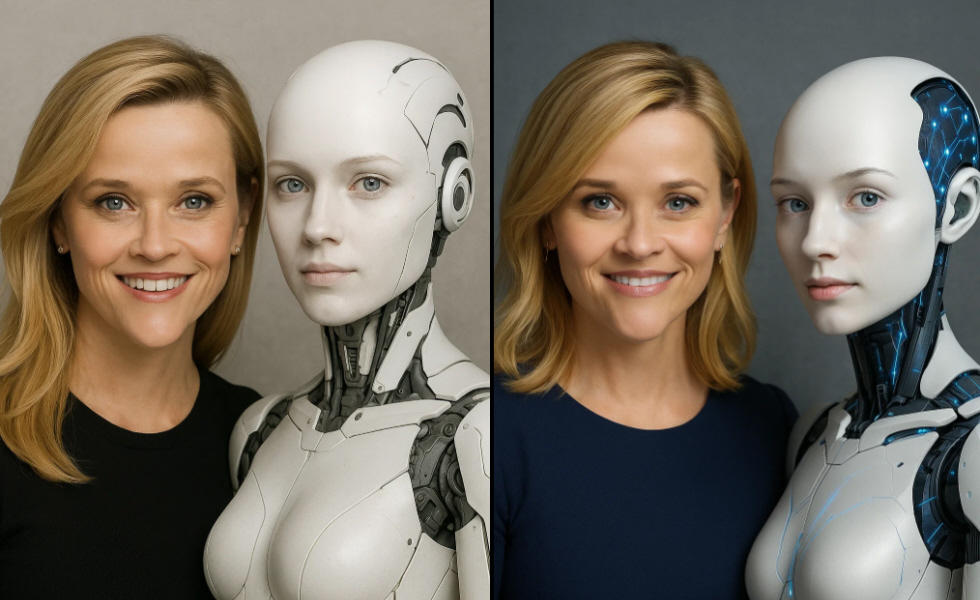
Academy Award-winning actress and producer Reese Witherspoon has joined the growing number of Hollywood figures speaking out about artificial intelligence, but unlike some of her peers, she has taken a more optimistic view. In a recent interview, Witherspoon emphasized that AI is “so, so important” for women to be involved with, not only as consumers but as creators and decision-makers in the entertainment industry.
She explained that the rapid advancement of AI technologies is reshaping how films, television shows, and digital content are produced, and she urged women to take leadership roles in this transformation to ensure their voices are represented. “I use AI every single day,” Witherspoon admitted, noting that the technology has helped her streamline her busy schedule as an actress, producer, and entrepreneur.
From drafting emails to organizing scripts and managing production timelines, she said that AI has freed up valuable time, allowing her to focus more on creativity and storytelling. For her, AI is not a threat to human imagination but rather a tool that, when used responsibly, can unlock new levels of efficiency and opportunity. Her comments stand in contrast to those of fellow actor Ben Affleck, who has voiced skepticism about whether AI can ever replace genuine artistic vision.
Affleck acknowledged that the technology might reduce costs for studios and democratize access to filmmaking tools, but he warned that it risks diluting originality if overused. Meanwhile, Scarlett Johansson has taken an even more cautious stance, calling for stricter U.S. government regulations on the use of AI, especially in preventing the unauthorized replication of celebrity images and voices.
Johansson has been outspoken about her own experiences with AI likeness issues, making her one of the leading voices for regulation. Witherspoon’s position highlights the diversity of opinion within Hollywood at a time when the entertainment industry is grappling with how to integrate AI. Strikes by writers and actors in 2023 already placed the role of AI at the center of heated negotiations, with concerns ranging from fair compensation to the potential replacement of human workers.
For some, AI represents a looming threat to jobs and creativity, while for others, like Witherspoon, it represents a new frontier that must be shaped thoughtfully and inclusively. Industry analysts point out that Witherspoon’s call for women to actively participate in the AI revolution is particularly significant. Technology sectors, including AI development, remain heavily male-dominated, and Hollywood has often lagged behind in offering women equal opportunities in leadership positions.
By linking gender equality with AI adoption, Witherspoon is not only pushing for broader representation but also for a future where women help define the ethics, creativity, and direction of the technology. Her comments have sparked conversations on social media, with many praising her for framing AI as both an opportunity and a responsibility.
As the entertainment world stands on the edge of a technological transformation, voices like Witherspoon’s may play a crucial role in shaping how Hollywood adapts. Whether AI becomes a tool of empowerment or a source of conflict will likely depend on who takes part in designing its future—and, according to Reese Witherspoon, women need to be right at the center of that process.


