
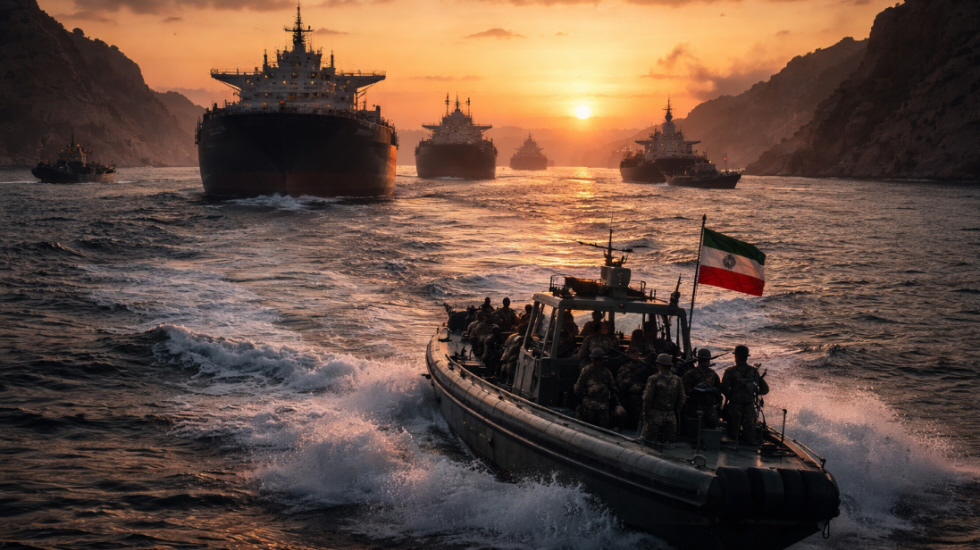
The Strait of Hormuz has become the latest pressure point in an already volatile global landscape, as Iran signals it will only allow passage to vessels that comply with its newly imposed conditions. The move effectively reshapes one of the most critical maritime corridors in the world, where nearly a fifth of global oil supply flows daily. Tehran has made clear that the reopening of the strait is not intended to restore normalcy, but rather to redefine control.
Iranian officials have stated that access will be granted selectively, prioritizing nations considered politically aligned or neutral toward the regime. The exclusion of United States vessels marks a significant escalation, transforming what was once an economic chokepoint into a strategic instrument of geopolitical leverage. The decision introduces a new layer of uncertainty into global trade routes already strained by ongoing conflict in the region. Since the outbreak of war in late February, the Islamic Revolutionary Guard Corps has tightened its grip over the passage, effectively regulating maritime traffic.
This shift has forced international shipping companies to reassess routes, insurance risks, and operational costs. Beyond political alignment, financial conditions have also emerged as a factor. Certain vessels have reportedly been granted passage after complying with substantial fees, adding a transactional dimension to access through the strait. The implications extend far beyond regional tensions. Energy markets are now responding to the possibility of prolonged disruption, with volatility increasing as traders factor in supply constraints and geopolitical risk premiums.
For countries dependent on Gulf oil exports, the situation represents a direct threat to economic stability. Any prolonged restriction could trigger ripple effects across global supply chains, from fuel prices to manufacturing output. Military presence in surrounding waters is also under heightened scrutiny, as international powers monitor developments closely.
The risk of miscalculation or confrontation remains elevated, particularly in such a narrow and strategically vital corridor. Diplomatic channels are likely to intensify in the coming days, as affected nations seek clarity and potential negotiation pathways.
However, the current posture from Tehran suggests a willingness to maintain firm control. In this evolving scenario, the Strait of Hormuz is no longer just a passage for oil — it has become a powerful symbol of influence, where access is dictated not only by geography, but by politics, power, and strategic intent.


