
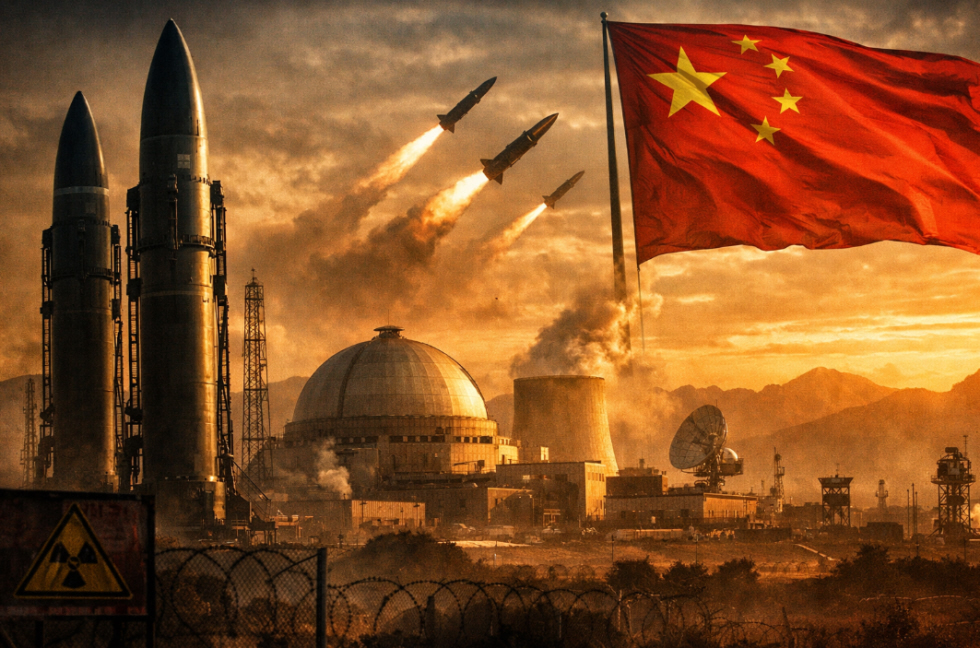
China is accelerating the expansion and redesign of several facilities linked to its nuclear weapons program, according to recent assessments, signaling a new phase in the global strategic balance. The reported upgrades include refurbishments and structural expansion at sites in Sichuan province, an area long associated with components of Beijing’s nuclear infrastructure. These developments come at a time of growing uncertainty in the global arms control architecture.
With major nuclear treaties under strain or expiration, concerns are rising among analysts that the world may be entering a new era of strategic competition reminiscent of Cold War dynamics. The weakening of formal limitations has created space for modernization efforts across multiple nuclear powers. Facilities in southwestern China have reportedly undergone significant upgrades over the past several years. While China has historically maintained a smaller nuclear arsenal compared to the United States and Russia, it has increasingly emphasized modernization, survivability, and strategic deterrence.
The focus appears to be less about matching warhead numbers and more about enhancing long-term credibility. China officially maintains a policy of “no first use” regarding nuclear weapons. However, modernization of infrastructure — including underground facilities, command systems, and missile support structures — reflects a desire to ensure resilience in the face of evolving military technologies. Advances in missile defense systems and space-based surveillance have altered strategic calculations globally. At the same time, the United States and Russia continue their own modernization programs.
Both countries possess significantly larger nuclear arsenals, yet each has invested heavily in upgrading delivery systems and maintaining deterrence credibility. The result is not a simple numerical race, but a broader technological and strategic recalibration. The erosion of arms control agreements has contributed to this shift. With fewer binding constraints and diminishing trust among major powers, nuclear strategy is increasingly driven by deterrence theory and long-term security planning rather than cooperative limitation. Strategic stability now depends more on mutual restraint than on formal treaty mechanisms.
For Asia-Pacific security, these developments carry particular weight. China’s nuclear posture is closely observed in relation to regional flashpoints, including Taiwan and broader U.S.–China strategic rivalry. While modernization does not automatically translate into imminent conflict, it reshapes the military balance and influences diplomatic calculations.
The expansion of nuclear infrastructure in China reflects a larger transformation in the international order. Rather than a sudden arms race, the world may be witnessing a gradual but decisive transition toward multipolar nuclear deterrence — a system defined less by treaties and more by strategic competition, technological innovation, and cautious calculation.


