

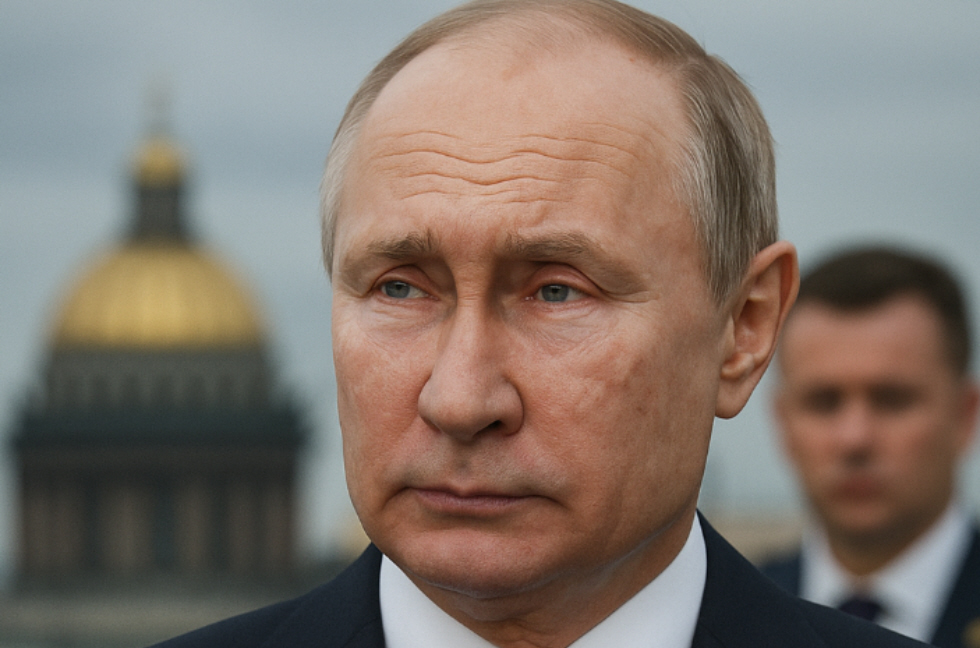
The war in Ukraine and Russia’s political future are inseparably linked to President Vladimir Putin. For more than two decades, he has consolidated a system built on absolute power, domestic repression, and a foreign policy defined by confrontation with the West. Yet the Kremlin’s political clock is ticking, and the question of who might one day replace him is starting to stir quiet tension among Russia’s elites.
Putin is now seventy-three, and according to various reports, he faces health issues that could eventually undermine his ability to rule indefinitely. Within Moscow’s inner circle, several names emerge as potential heirs to the “modern tsar.” Among them is Prime Minister Mikhail Mishustin, a loyal technocrat who has maintained a discreet yet efficient profile; Security Council Secretary Nikolai Patrushev, a former intelligence chief known for his hardline nationalist views; and Defense Minister Sergei Shoigu, symbol of the regime’s militaristic continuity.
Other familiar figures, such as former president Dmitry Medvedev — now deputy head of the Security Council — still seek influence despite declining popularity and limited political weight. The Kremlin’s central dilemma is to find someone capable of ensuring continuity without threatening Putin’s legacy. A mismanaged transition could fracture the system of control, triggering power struggles between security services, oligarchs, and the military.
For now, the Russian leader appears intent on remaining in power until the 2030 elections, but even his closest allies privately acknowledge that succession will be the most delicate moment for Russia since the fall of the Soviet Union. The nation’s political future — and the outcome of the war — still revolve around one man whose time at the top may soon be running out.


