
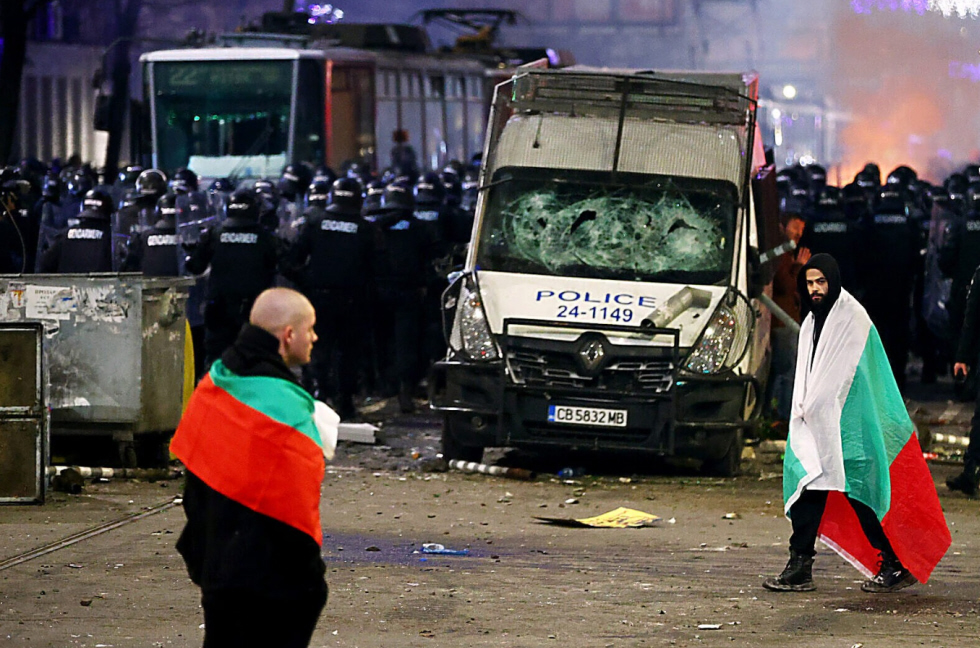
Bulgaria is experiencing its largest wave of protests in years, driven by widespread frustration over corruption, political instability, and the country’s upcoming transition to the eurozone. On Monday, tens of thousands of people took to the streets across major cities in the Balkan nation, with the largest gathering taking place in Sofia’s Parliament Square. The demonstration, the biggest in years, was marked by chants of “mafia” and “resignation” as protesters demanded the government step down and denounced what they view as entrenched criminal influence in state institutions.
Since Wednesday, residents in the capital have also been rallying against the proposed 2026 budget—the first to be calculated in euros—which many believe disguises ongoing corruption and deep financial mismanagement. Bulgaria is set to adopt the euro on January 1, 2026, a milestone that has sparked significant concern among citizens worried about potential spikes in consumer prices, a pattern seen in other countries adopting the common currency.
After the main demonstration concluded, clashes broke out between masked individuals and police forces. Stones, bottles, and fireworks were thrown at the headquarters of the DPS party, which supports the government, prompting officers to respond with tear gas. A nearby office of the ruling conservative Gerb party was also vandalized. Among peaceful demonstrators, there was growing suspicion that the masked aggressors might have been provocateurs hired to discredit the protests and provide justification for a future crackdown by authorities.
Amid rising tension, President Rumen Radev called for an immediate end to the violence, describing the clashes as a “provocation by the mafia” and reiterating his demand for the government’s resignation. “There is only one way out: resignation and early elections,” he declared on Facebook.
The unrest highlights the deep institutional fragility within Bulgaria, which ranks alongside Hungary and Romania at the bottom of Transparency International’s corruption perception index among EU member states. With a controversial budget, a mobilized public, and a weakened government, Bulgaria faces a period of serious political instability just as it approaches its historic transition to the euro—an evolution now overshadowed by public distrust, economic uncertainty, and a rapidly escalating social crisis.


