
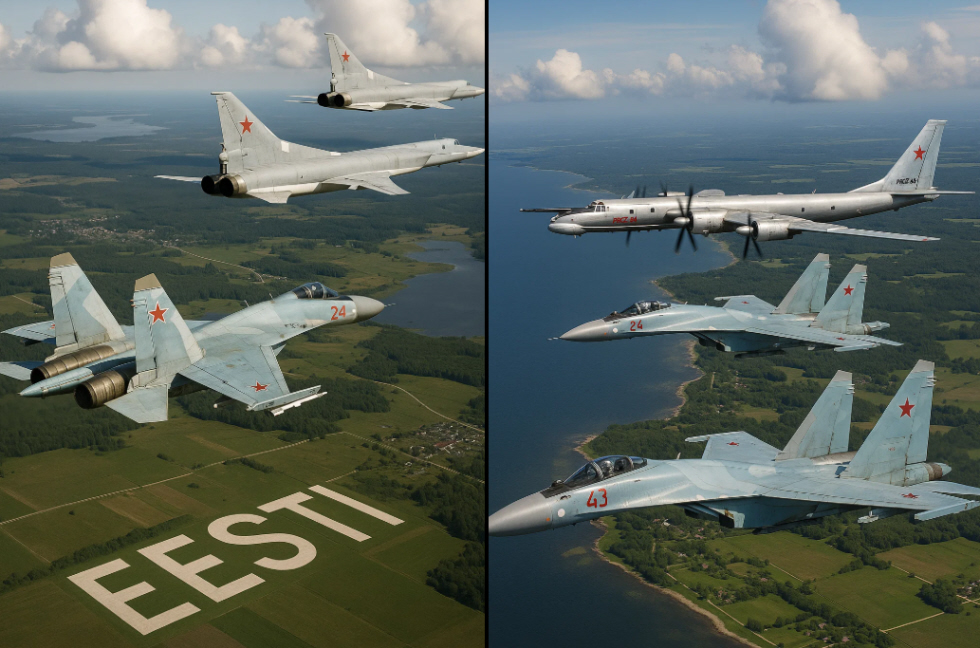
Tensions in European skies rose once again after Estonia reported a serious violation of its airspace by Russian fighter jets. According to the Estonian Ministry of Defense, three MiG-31 aircraft entered the country’s airspace on September 19, remaining there for 12 minutes near the island of Vaindloo in the Gulf of Finland. The jets entered without authorization, with their transponders switched off, no flight plan submitted, and without responding to air traffic control communications, an action Tallinn described as a “blatantly audacious provocation.”
In response to the incursion, the Estonian government invoked Article 4 of the North Atlantic Treaty, which provides for consultations among NATO allies when a member state believes its sovereignty or security is under threat. The Alliance reacted immediately by deploying F-35 fighter jets from the Italian Air Force, currently stationed in Estonia, as part of the ongoing air policing missions in the region. Moscow, for its part, denied having violated Estonian airspace and insisted that its aircraft were flying over international waters. However, Baltic authorities, backed by allied nations, maintain that they possess radar data and visual evidence confirming the incursion.
International analysts consider this incident part of a series of provocative actions by Russia, which in recent months has also deployed drones over Poland and carried out other aerial intrusions near NATO territories. The episode has heightened European concerns about Russia’s growing military assertiveness in the region and raises new challenges for collective security.
While Estonia demands a firm response from its Western partners, NATO has already scheduled formal discussions on the case, underlining the importance of maintaining constant vigilance in the face of what is seen as deliberate attempts by Moscow to test the Alliance’s response capabilities.


