
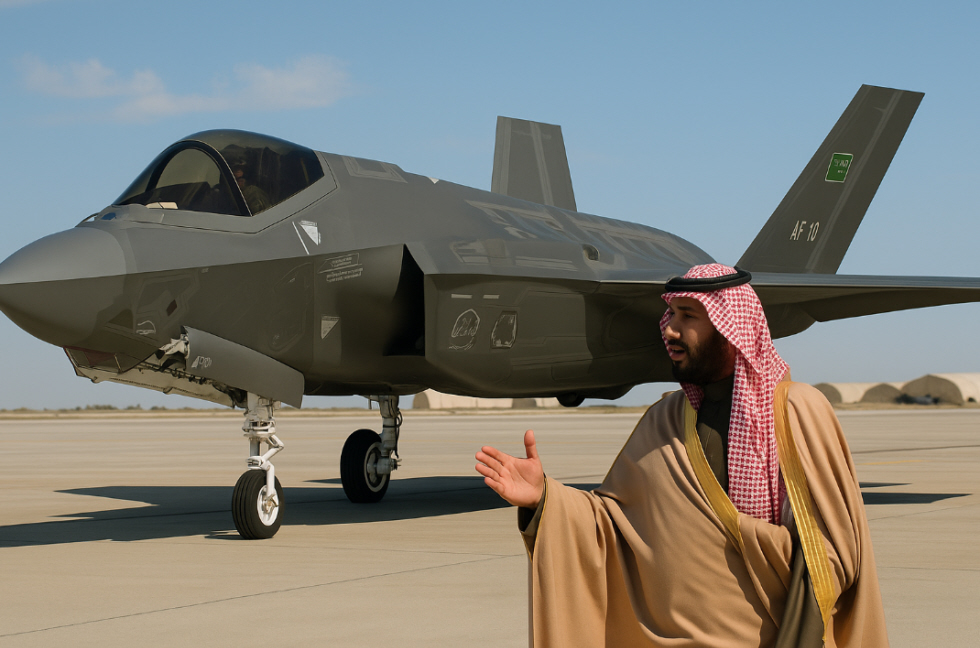
The White House has sent a fresh signal of strategic alignment with Riyadh: the U.S. administration plans to sell next-generation F-35 fighter jets to Saudi Arabia. The announcement was made by President Donald Trump one day before the highly anticipated visit of Saudi Crown Prince Mohammed bin Salman to Washington.
The crown prince departed on Monday afternoon from Riyadh’s airport, heading to the U.S. capital with a high-level delegation in a visit aimed at strengthening military, economic, and political cooperation between the two countries.
The F-35, widely regarded as one of the world’s most advanced fighter jets due to its stealth technology and combat capabilities, has so far been reserved exclusively for Israel in the region.
A potential sale to Saudi Arabia would therefore mark a significant shift in the military balance in the Gulf. According to Trump, the kingdom not only wants to purchase a substantial number of these aircraft, but is also interested in expanding its arsenal with additional systems.
Israeli media, including the newspaper Haaretz, had already speculated that the United States—apparently with the consent of Prime Minister Benjamin Netanyahu—might be willing to relax its longstanding doctrine that guarantees Israel a qualitative military edge.
Saudi Arabia has been the largest buyer of U.S. weapons for years, but that close relationship has sparked recurring controversy. In the U.S. Congress, there has been periodic resistance to new arms deals, particularly because of Riyadh’s role in the war in Yemen and repeated reports of civilian casualties.
Any agreement to sell F-35s to the Saudis would reignite the debate over how far Washington is prepared to go in prioritizing strategic alliances and economic interests over human rights concerns and regional stability.


