
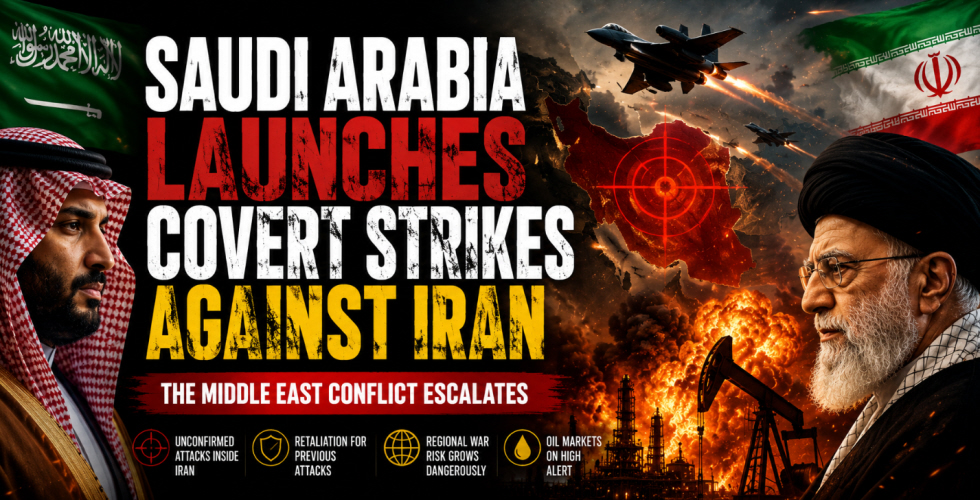
New revelations about secret military operations in the Middle East have intensified international concerns over a possible expansion of the regional conflict. According to Western and Iranian officials cited in recent reports, Saudi Arabia allegedly carried out undisclosed strikes against Iran. The operations were reportedly launched in retaliation for previous attacks carried out against Saudi territory during the broader regional war. The information immediately shook diplomatic and energy markets worldwide. For years, Saudi Arabia and Iran have maintained a deep political, religious and strategic rivalry across the Middle East.
However, the possibility of direct Saudi strikes on Iranian territory represents a major shift in the regional balance of power. Analysts believe these operations could mark a more aggressive phase in the long-standing confrontation between the two regional powers. Tensions continue to rise in an already highly unstable geopolitical environment. The alleged operations were reportedly conducted discreetly without any official public acknowledgment from the Saudi government. Western intelligence officials indicated that the strikes were intended as retaliation against Iranian actions targeting Saudi facilities and interests.
Tehran also avoided making immediate public statements regarding the reported attacks. The secrecy surrounding the operations highlights the political and military sensitivity of the conflict. The situation is generating concern because of the strategic importance both countries hold within the global energy market. Saudi Arabia remains one of the world’s largest oil exporters, while Iran maintains enormous geopolitical influence throughout the Gulf region. Any direct military escalation between the two nations could significantly affect global energy supplies. International markets are reacting cautiously to every new sign of regional instability.
The regional conflict already involves multiple actors and overlapping crises. Tensions involving Israel, United States and Iran continue increasing the risk of a broader Middle Eastern confrontation. Possible Saudi military involvement introduces an entirely new level of complexity to the situation. Several governments fear the conflict could evolve into a much larger regional war. International security experts consider the Saudi-Iranian rivalry one of the primary sources of instability in the modern Middle East. Both nations have competed for years over political, military and religious influence across the region.
Yemen, Syria, Lebanon and Iraq have all become battlegrounds for indirect strategic competition between both powers. Now, the possibility of direct confrontation is creating new global concerns. The strategic importance of the Strait of Hormuz has also returned to the center of international attention. A significant portion of the world’s oil supply passes daily through the narrow maritime corridor near Iran. Any military disruption in the area could affect shipping routes, maritime insurance costs and global energy prices. Governments and financial markets remain highly alert to the possibility of regional escalation. Meanwhile, Western powers continue closely monitoring developments across the Middle East.
The United States maintains military forces at several regional bases while reinforcing security cooperation with allied nations. European governments are increasingly concerned about the economic consequences that a larger conflict could trigger, especially regarding inflation and energy prices. Preventing further escalation has become a major international priority. The use of covert military operations and targeted strikes also reflects the changing nature of modern regional conflicts. Wars are no longer always formally declared, but increasingly unfold through intelligence operations, drones, cyber activities and limited attacks.
This evolving form of warfare makes crises more difficult to contain before they escalate further. The lack of transparency also raises the risk of dangerous miscalculations between rival powers. As new reports continue emerging about military movements across the Middle East, fears of a broader regional war continue growing. Saudi Arabia and Iran represent two of the most influential powers in the Islamic world, and any direct confrontation between them would carry immediate international consequences.
Diplomats and global organizations are attempting to prevent a deeper deterioration of the situation. Nevertheless, the regional balance appears increasingly fragile and unpredictable.


