

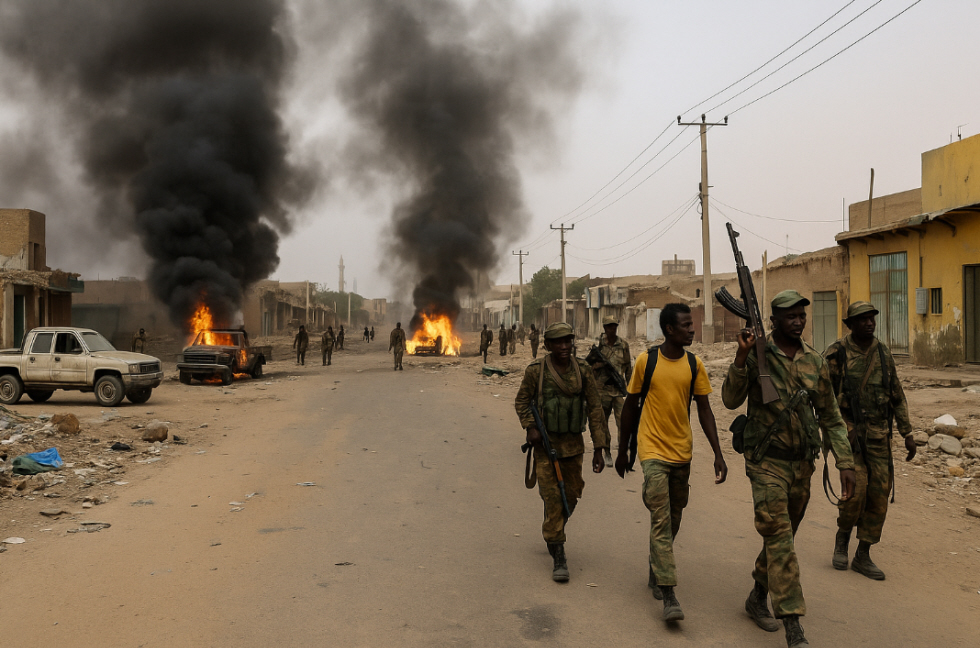
The Rapid Support Forces (RSF) have taken control of Al-Fashir, the last major city in Darfur held by the Sudanese government, after the army’s withdrawal on Monday. The United Nations estimates that up to 300,000 people remain in the city and warns of an escalation marked by killings, torture, rape, and ethnic-based displacement. Since the RSF declared full control on Sunday, reports of arbitrary executions and attacks on civilians have multiplied, while thousands of displaced residents flee to nearby areas seeking safety. International condemnation is growing.
Germany’s Foreign Ministry denounced reports that RSF fighters have penetrated deep into the city, “killing civilians indiscriminately,” and demanded an immediate end to the violence. UN High Commissioner for Human Rights Volker Türk warned that the “risk of large-scale atrocities and ethnic violence” increases by the day and called for urgent measures to protect civilians. UN Secretary-General António Guterres urged both the Sudanese armed forces and the RSF to contact his envoy for Sudan, Ramtane Lamamra, and take verifiable steps toward a negotiated solution while ensuring unimpeded humanitarian access.
The conflict is rooted in a brutal power struggle that began in April 2023 between de facto ruler Abdel-Fattah al-Burhan and his former deputy Mohamed Hamdan Daglo, who commands the RSF. While the army has regained parts of Khartoum, the militia has consolidated control over Darfur, raising fears of a permanent division of the country. Reliable casualty figures are unavailable, but U.S. estimates suggest as many as 150,000 people have been killed. More than 12 million have been displaced, and about half the population — over 26 million — faces hunger. Al-Fashir and its surroundings have been an epicenter of suffering for over eighteen months, trapped between malnutrition, disease, and daily violence now deepened by the city’s fall.


