

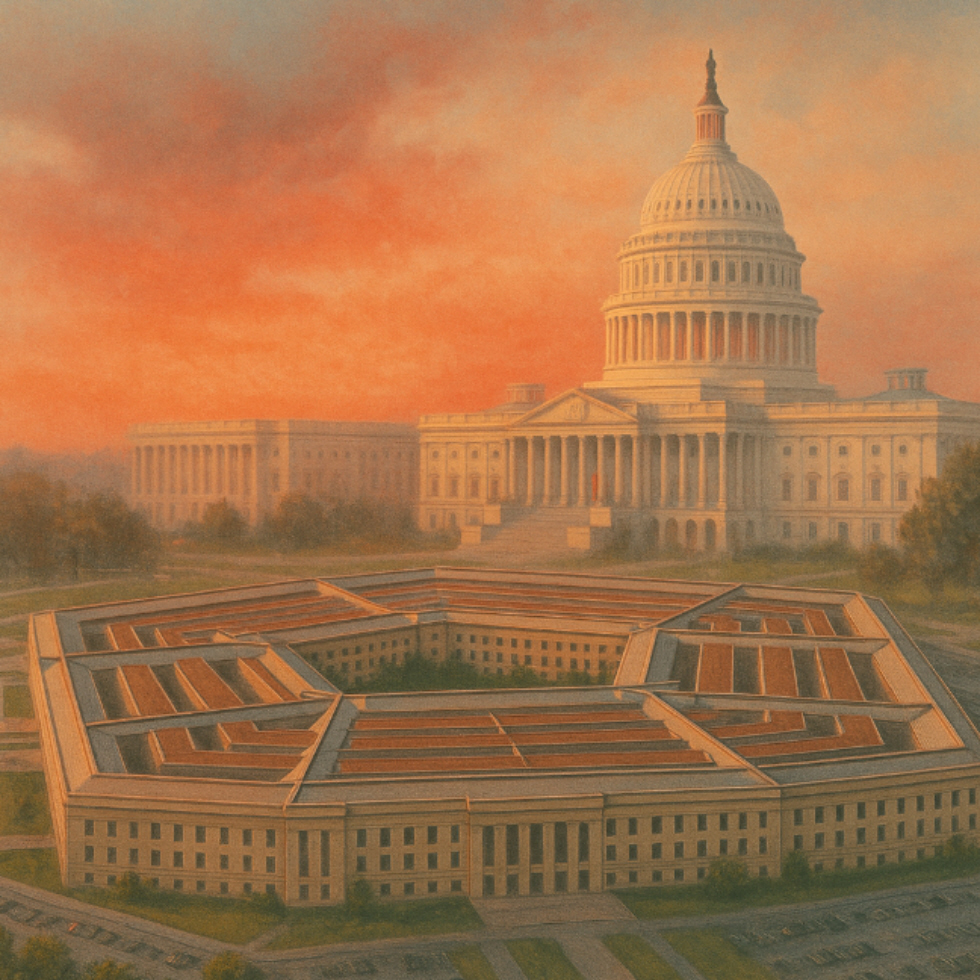
The United States Department of Defense has quietly introduced new internal rules requiring that all contact between Pentagon personnel and members of Congress receive prior authorization from senior officials. The directive, signed last week, reshapes how the military establishment interacts with lawmakers and signals a broader shift toward centralizing the flow of information.
Senior aides confirmed that from now on, no officer, analyst, or civilian within the department may speak to congressional staff without clearance, citing the need for message discipline and alignment with national defense priorities. Behind the administrative language lies a clear political undercurrent. The Pentagon’s leadership has expressed its intention to restore what it calls a “warrior ethos” and reinforce internal hierarchy after years of fragmented communication.
The measure has been interpreted by many observers as an attempt to regain control over narratives concerning military readiness, defense spending, and ongoing international operations. While the department insists that the move seeks coherence rather than secrecy, it effectively places tighter boundaries on oversight and public transparency. At the same time, additional restrictions have been applied to the press.
Several reporters covering defense matters have reported losing access to their offices and credentials, a decision justified by security reviews but viewed by others as a sign of growing tension between the military and the media. These changes mark a new phase in the relationship between the Pentagon, Congress, and the public. For decades, communication between defense officials and lawmakers had operated through relatively open channels.
The new order breaks with that tradition, turning information into a matter of command rather than exchange. Analysts warn that this centralization could complicate the balance of power between the executive and legislative branches. Congress relies on direct and timely communication to conduct oversight and allocate budgets. Limiting that access may strengthen the Pentagon’s autonomy but weaken democratic accountability.
It also highlights a deeper transformation in the American defense mindset — one that seems to prioritize internal unity and control over open dialogue. In this changing environment, the question remains whether these measures will bring greater efficiency or merely deepen the wall of silence between the armed forces and the institutions meant to supervise them.


