
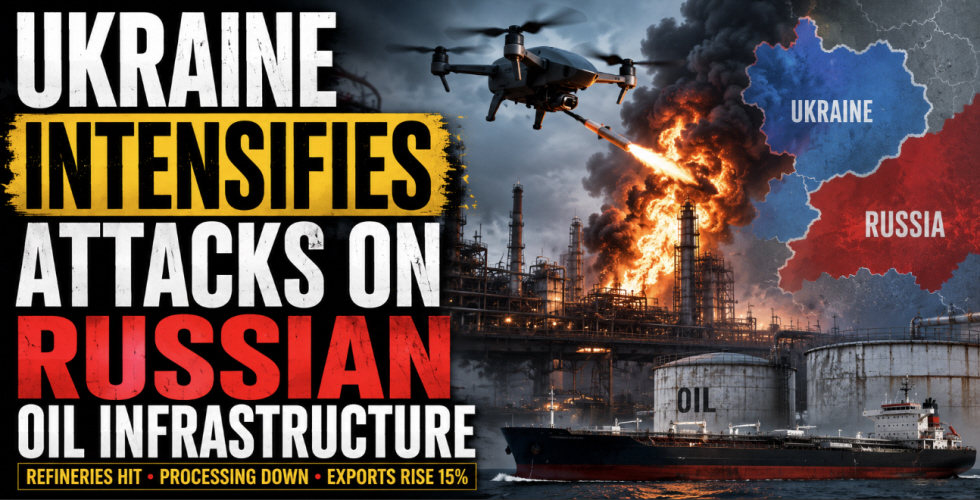
Ukrainian attacks on Russian energy facilities continue to generate significant economic and strategic consequences. Over recent months, several refineries and oil-processing centers have been targeted by drones and other long-range operations. Kyiv's objective is to weaken one of Russia’s most important sources of revenue. The campaign is part of a broader strategy aimed at reducing Moscow’s ability to finance the war. According to various reports, the accumulated damage has affected Russia’s capacity to process part of its oil production within its own territory. Some facilities have been forced to reduce operations or temporarily suspend certain activities.
This has required energy companies and government authorities to reorganize portions of their logistics network. The full extent of the impact is still being assessed. Despite the damage to its energy infrastructure, Russia remains a major player in global oil markets. Demand for energy continues to be strong in many regions of the world. As a result, Moscow has sought alternative ways to maintain export flows. These efforts have helped offset some of the challenges created by the attacks. Recent data indicate that Russian oil exports through western ports increased by approximately 15 percent in May compared to the previous month.
The rise demonstrates the country’s ability to adapt its trade routes under difficult circumstances. It also highlights the continuing importance of energy exports to the Russian economy. Oil revenues remain a critical component of government finances. Energy analysts believe the conflict has opened a new dimension in the war between Russia and Ukraine. Beyond battlefield operations, both sides are seeking to disrupt the economic and logistical capabilities of their opponent. Energy facilities have become strategic targets because of their financial significance. Each attack is intended to impose additional costs on the other side.
Ukrainian officials argue that refineries and energy centers contribute directly to funding Russia’s military operations. For that reason, they view these facilities as legitimate strategic targets within the context of the conflict. Kyiv has significantly expanded the reach of its operations during the past year. This development has drawn the attention of military observers worldwide. Meanwhile, Russia continues strengthening air defense systems around facilities considered critical to national security. Additional resources have been allocated to protect refineries, fuel depots, and export terminals. However, the vast size of Russian territory presents a considerable challenge.
Providing complete protection for every facility is extremely difficult. International energy markets are closely monitoring these developments because of Russia’s role as a major oil producer and exporter. Any significant disruption to production or exports could influence global oil prices. Investors continue evaluating potential risks to worldwide energy supplies. Market stability remains closely tied to the evolution of the conflict.
Experts note that Russia’s ability to maintain and even increase exports demonstrates a considerable degree of economic resilience. At the same time, they warn that prolonged damage to infrastructure could create cumulative effects over time. Repair and maintenance costs continue to rise. Uncertainty also complicates long-term investment planning within the energy sector. For now, the war continues to unfold on both military and economic fronts.
The attacks on refineries underscore the strategic importance of energy resources in modern warfare. Ukraine is seeking to increase pressure on Russia’s financial resources, while Moscow works to preserve the stability of its export network. The outcome of this struggle may influence the direction of the conflict in the months ahead.


