
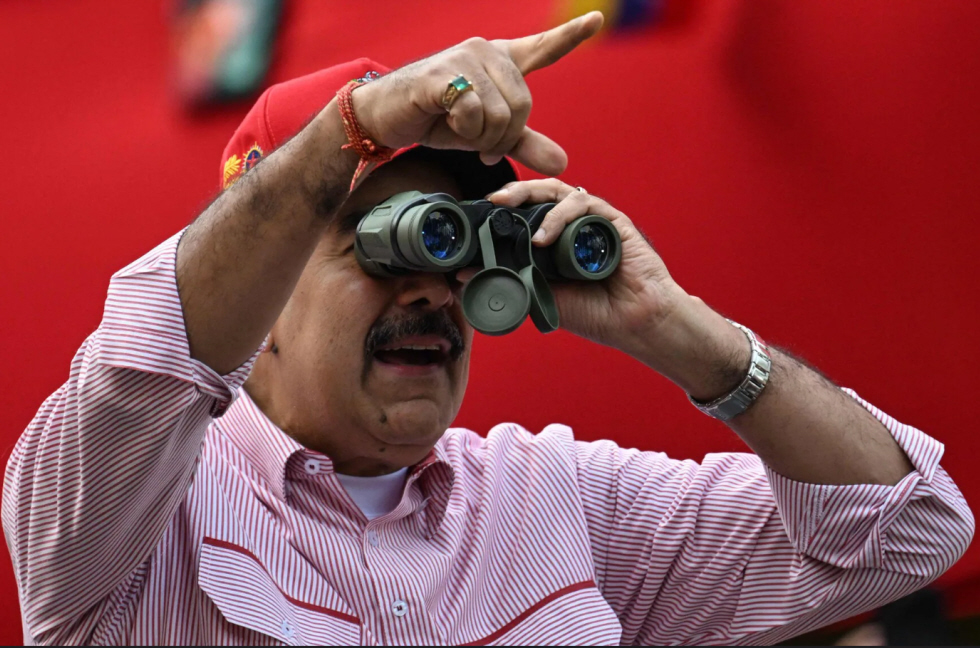
Tensions between Venezuela and the United States continue to escalate as President Nicolás Maduro denounced what he called a “slave-like peace” before thousands of supporters in Caracas. His remarks came after former U.S. President Donald Trump reportedly issued an ultimatum demanding Maduro’s departure from power. Maduro insisted that Venezuela seeks peace, but a peace grounded in sovereignty, equality, and freedom—not one imposed under pressure or external conditions.
His statements were met with strong approval from the crowd gathered in the capital. The situation deteriorated further when Trump ordered the closure of U.S.-controlled airspace over Venezuela, a decision interpreted as a direct escalation of pressure. Although the White House has not provided details of recent communications, sources cited by international agencies report that Maduro allegedly made broad demands during a November phone call, including safe passage out of the country, amnesty for himself and his family, and the lifting of sanctions affecting more than one hundred Venezuelan officials accused by the United States of crimes such as drug trafficking and human rights violations.
According to the same sources, the ultimatum expired on Friday, prompting Washington to intensify its stance. During his speech, Maduro claimed that Venezuela has endured what he labeled “psychological terrorism” for twenty-two weeks, arguing that the United States has continuously “tested” the country. Vice President Delcy Rodríguez stated that Venezuela is fighting to defend its sovereignty and natural resources, while Jorge Rodríguez, the president of the National Assembly, urged citizens to remain mobilized despite what he described as external threats, psychological warfare, and misinformation campaigns.
Meanwhile, the United States has positioned several warships and the world’s largest aircraft carrier off Venezuela’s coast since September. U.S. forces continue to intercept vessels suspected of drug trafficking in the Caribbean and the Eastern Pacific, reinforcing Washington’s broader regional operations. The current moment reflects a bilateral relationship marked by mistrust, political maneuvering, and symbolic military displays that may shape Venezuela’s crisis in the days ahead.
As both governments consolidate their narratives for domestic and international audiences, uncertainty remains high while global observers closely monitor how the situation evolves.
By:
NewsXX1 – International TEAM


