
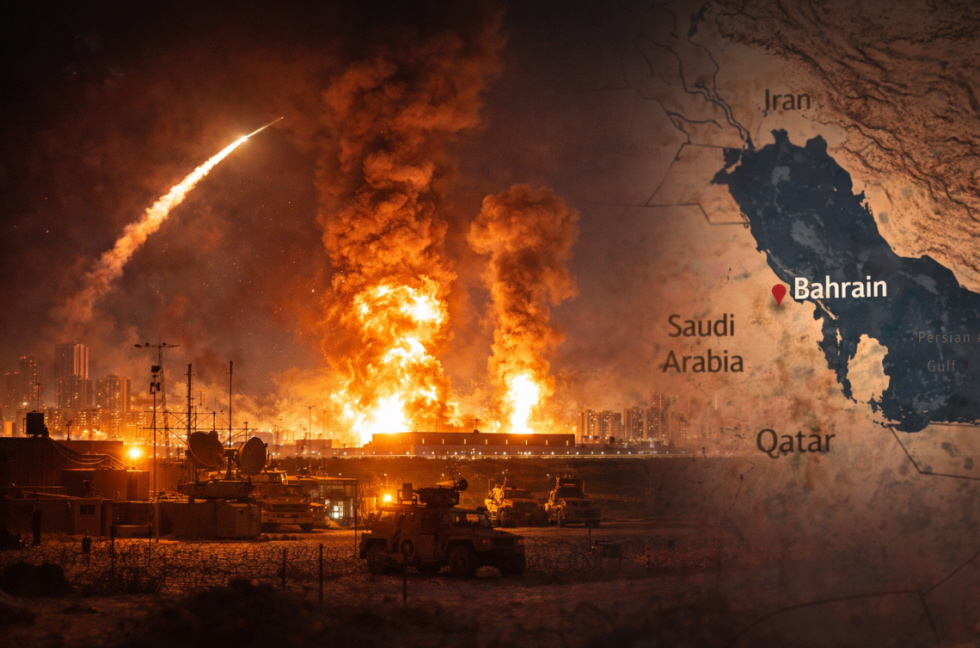
The United States Department of Defense has firmly rejected claims circulating in foreign media that accused American forces of launching a missile strike on a civilian area in Bahrain. U.S. officials described the reports as false and stated that they do not reflect what actually occurred. According to the initial allegations, the supposed strike had been attributed to U.S. forces amid the escalating conflict currently affecting several parts of the Middle East.
These accusations were primarily circulated by media outlets linked to Iran and Russia. As the claims began spreading widely, the Pentagon issued a direct response denying the allegations. Officials said the reports were part of an inaccurate narrative surrounding recent events in Bahrain. U.S. Central Command, known as CENTCOM and responsible for American military operations in the Middle East, also responded to the accusations.
In its statement, the command described the claims as a clear falsehood. American military officials emphasized that verified information coming from authorities in Bahrain presents a different version of events. According to the official reports from the Gulf nation, the attack that caused civilian casualties was not carried out by U.S. forces. Bahrain’s Ministry of Health reported that a missile strike in a populated area resulted in the deaths of at least 32 people.
The incident shocked the country and further heightened tensions across the region. Authorities in Bahrain attributed the attack to forces linked to Iran, as the broader regional conflict continues to intensify. The incident highlights the growing complexity of the situation in the Middle East, where military confrontation is increasingly accompanied by a fierce battle over information and narratives.
In modern conflicts, competing claims and counterclaims often become part of the broader geopolitical struggle between rival powers. As the fighting continues and diplomatic tensions rise, governments and military organizations are closely monitoring developments, aware that any new incident could further destabilize an already fragile region.


