
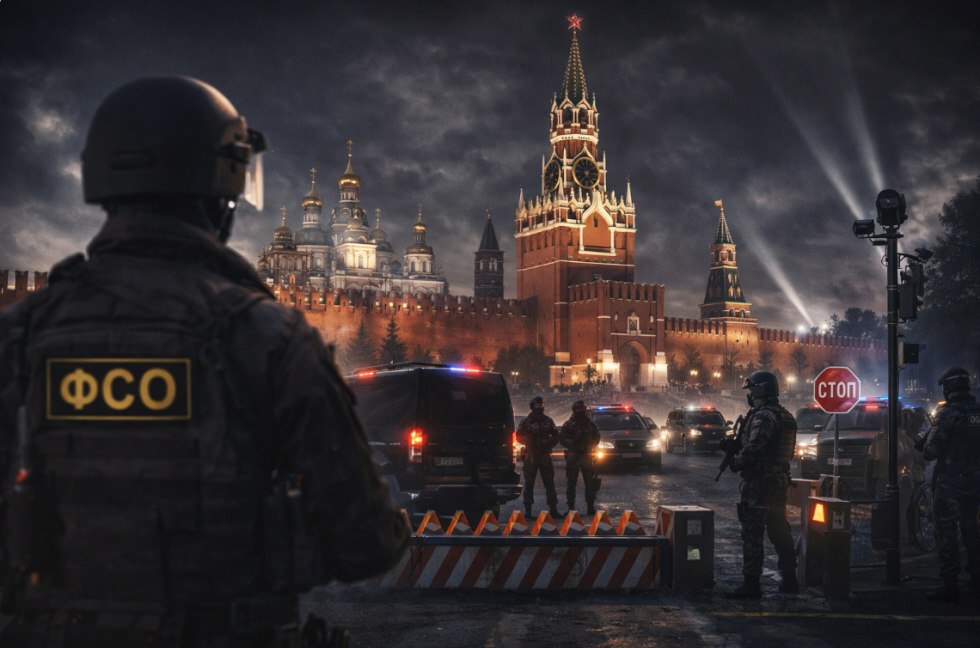
The Kremlin has significantly tightened its security measures amid growing concerns over potential vulnerabilities within its protective systems. The move reflects a shift in risk perception at the highest levels of power. The safety of Russia’s president has become an even greater priority. The internal atmosphere shows clear signs of tension. Sources close to Russia’s security environment indicate rising concern about possible weaknesses in its electronic surveillance infrastructure.
These systems, designed to safeguard the leader, may contain exploitable gaps. The possibility of tracking or intelligence breaches is alarming officials. Uncertainty continues to grow. The threat is no longer limited to conventional risks. It now includes advanced technological and intelligence-based challenges. In an era of hybrid warfare, such factors carry increasing weight. Protecting national leaders has become far more complex. The landscape has evolved. Within the security apparatus, there is growing anxiety that adversaries could exploit these vulnerabilities. Internal monitoring has intensified.
Protocols are being reviewed continuously. A climate of caution and suspicion is emerging. Trust is becoming more limited. The tightening of measures includes stricter control over communications, movements, and access to sensitive information. Every step taken by the president is now under closer scrutiny. Physical and digital security are increasingly intertwined. The alert level has clearly risen. Analysts believe these actions reflect a broader trend of instability in the global geopolitical environment.
Rising tensions have increased risks for key world leaders. Personal security is no longer just about physical protection. Technology plays a central role. At the same time, protection has been reinforced across key Kremlin facilities. The objective is to eliminate any possible weak points. Authorities are working to anticipate high-risk scenarios. Prevention has become a strategic priority. Some reports suggest that this heightened security posture is also influenced by recent international developments that have raised alarm within Russian leadership circles. While not all of these events are officially confirmed, they have shaped threat perceptions. T
he psychological impact is evident. The security of global leaders is becoming increasingly complex in today’s environment. Threats are often invisible and can emerge from multiple fronts. This reality is forcing governments to rethink traditional protection strategies. Adaptation is essential. In Russia’s case, the combination of external pressure and internal challenges has intensified the need for control.
The Kremlin seeks to project strength. Yet it also faces a rapidly changing reality. The balance is delicate. The reinforcement of security measures also carries political implications. It reflects an environment where stability cannot be taken for granted. These decisions send signals to the international community.
They reveal the level of concern within leadership circles. In this context, the Kremlin is entering a phase of maximum vigilance where every detail matters. The protection of leadership has become a full-scale operation. Uncertainty remains present. And the global situation continues to evolve.


