
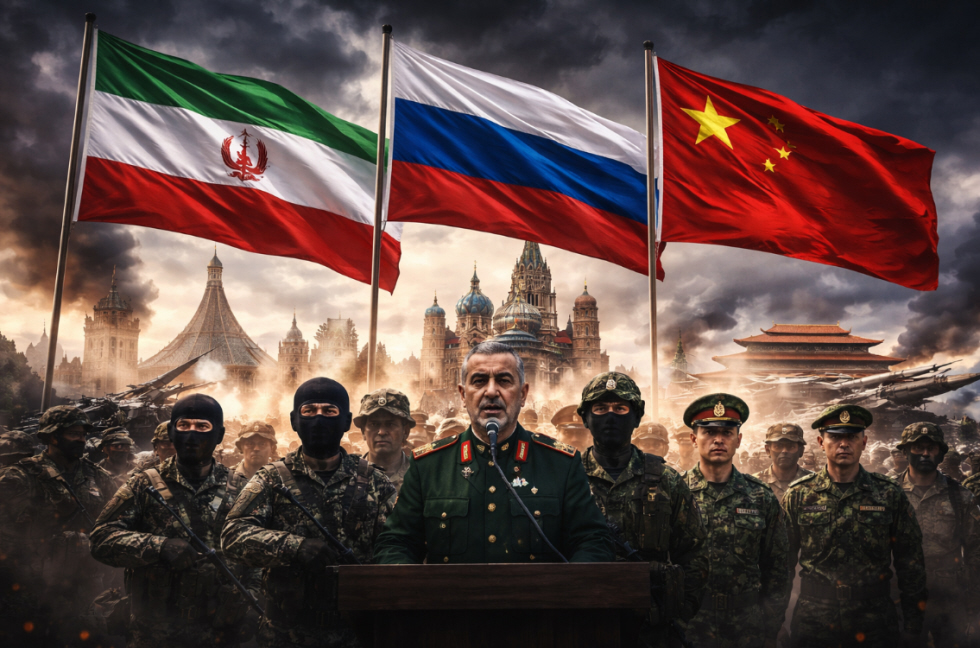
The United States maintains that Iran’s military capabilities have been significantly weakened during the ongoing conflict. Washington continues to project an image of strategic pressure and control. The message aims to reinforce the perception of effective containment. And to demonstrate that its actions are yielding results. However, a different narrative is emerging from Tehran. Statements from Iranian leadership suggest a more complex reality. Iran is working to project resilience and strength.
And to challenge the idea that it is isolated. In this context, Iranian officials have indicated that the country may not be facing the confrontation alone. References have been made to broader strategic partnerships. These claims introduce a new dimension to the conflict. And raise the stakes on the global stage. Mentions of potential external support have drawn close attention from analysts. In particular, the roles of Russia and China are being closely examined. While not fully confirmed in official terms, the suggestion itself is significant. And it carries important geopolitical implications.
Such statements can be interpreted as part of a broader deterrence strategy. By signaling possible backing, Iran seeks to send a message to its adversaries. The goal is to increase the cost of escalation. And to demonstrate long-term endurance. At the same time, these developments reflect a shift toward a more globalized conflict dynamic. This is no longer solely a regional confrontation. Multiple powers may have interests at stake. The international balance becomes more fragile. From Washington’s perspective, the focus remains on degrading Iran’s military capacity. Ongoing efforts are aimed at limiting its operational capabilities.
The strategy seeks to reduce future risks. And maintain strategic initiative. Meanwhile, Iran’s messaging is designed to counter that narrative. Projecting strength is critical on both political and psychological fronts. Public perception plays an important role. The conflict is being shaped across multiple dimensions. Analysts warn that this type of rhetoric could contribute to rising global tensions. The possibility of clearer alignments between major powers raises concerns. The international community is watching closely.
The risk of broader escalation remains. In parallel, the relationship between Iran, Russia, and China has been increasingly scrutinized in recent years. These are complex strategic ties. Built on shared interests. But also defined by certain limits. The suggestion of military support, even if not fully confirmed in all aspects, carries strong symbolic weight.
It reinforces the perception of emerging geopolitical blocs. And raises questions about the future of global order. In this context, the conflict is entering a phase where perception and alliances may be as decisive as military actions. Narrative becomes a strategic tool. Tensions continue to rise. And the global outlook remains uncertain.


