
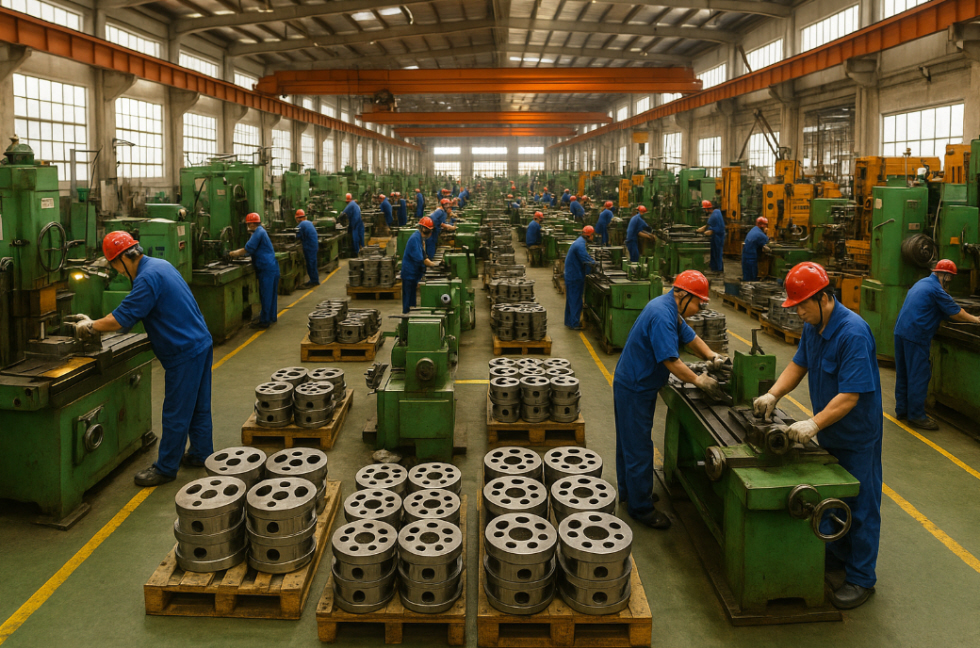
China’s manufacturing sector recorded a fresh rebound after a period of strain, driven by an increase in orders and higher production levels, highlighting the resilience of its industrial base. In September, private factory activity reached its strongest pace of expansion since March, supported by a recovery in new domestic orders and renewed momentum in export demand, generating optimism among manufacturers.
This rebound represents a hopeful signal for an economy that has endured difficult months marked by global slowdown, trade uncertainty, and inconsistent internal demand. However, the improvement does not eliminate existing challenges. The recovery remains uneven — not all sub-industries are expanding at the same pace — and many sectors warn that a reduction in global demand or new tariffs could quickly reverse the trend.
And although manufacturing continues to be the country’s key engine, its ability to sustain growth will depend on the stability of international trade, domestic stimulus measures, and the revival of local consumption. This variability shows that China cannot rely solely on manufacturing to support its economic trajectory; it needs diversification, a stronger internal market, and strategies that allow the benefits of growth to be distributed more evenly.
If the country succeeds in overcoming its weak spots — subdued consumption, a pressured labor market, and global headwinds — it could consolidate its recovery as a central force in global manufacturing.

