
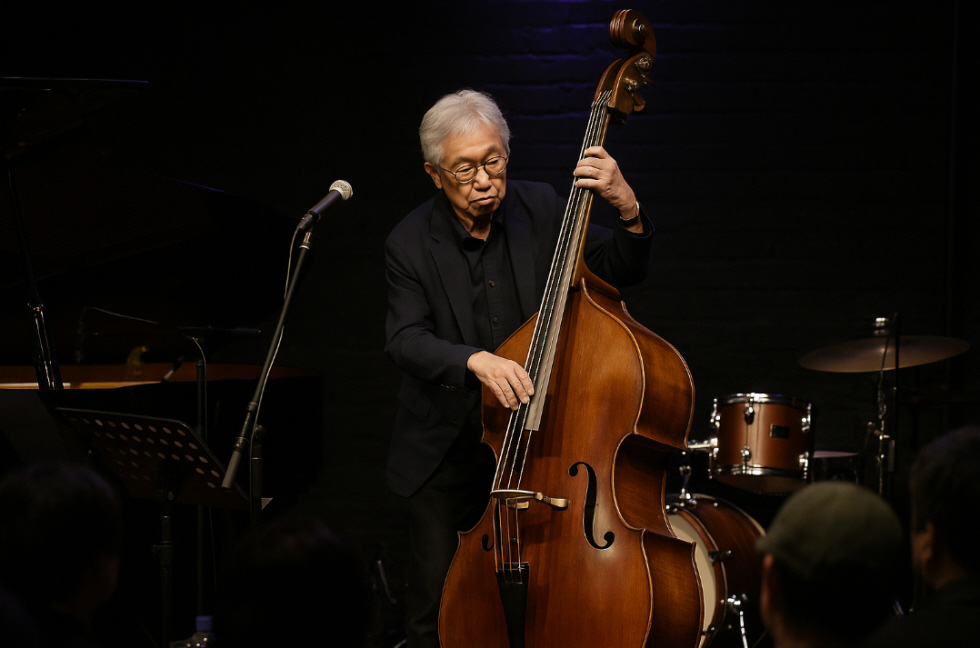
The growing diplomatic tension between China and Japan has now reached the cultural world, striking directly at the music industry. Chinese authorities have ordered the immediate suspension of all concerts featuring Japanese artists, causing chaos in music venues and frustration among both performers and fans. Renowned 80-year-old jazz bassist Yoshio Suzuki was abruptly stopped during a soundcheck on Thursday in Beijing by plainclothes police, who informed the venue that every concert involving Japanese musicians had been canceled without exception.
According to Norwegian promoter Christian Petersen-Clausen, who has lived in China for over a decade, the venue owner received the police order “in less than a minute,” leaving no possibility of negotiation. The cancellation was especially devastating for Suzuki and his quintet, who had spent months navigating the approval and visa process required to perform in China. Petersen-Clausen stated that the musicians had been “excited and deeply honored” to come play for Chinese audiences. But within hours, a dozen concerts scheduled across major Chinese cities were suspended, and local authorities warned event organizers that even performances planned for 2025 could be canceled.
The abrupt decision sparked anger among Chinese fans: videos circulating on social media showed crowds shouting “Give us our money back!” outside closed venues, highlighting the growing frustration over the unexpected cultural boycott. The root of the dispute lies in recent remarks by Japan’s new prime minister, Sanae Takaichi, who said that a potential Chinese attack on Taiwan would pose an existential threat to Japan and could justify a military response from Tokyo.
Beijing reacted sharply, condemning the statement as a direct provocation and announcing diplomatic and economic retaliation. Measures included a tourism boycott of Japan, a ban on Japanese seafood imports, and now the full suspension of performances by Japanese musicians in China. Despite recent talks between officials from both countries, no significant progress has been made, and tensions continue to rise. Culture — which for decades has served as a bridge between nations — is now caught in the middle of a political confrontation that shows no sign of easing.


