

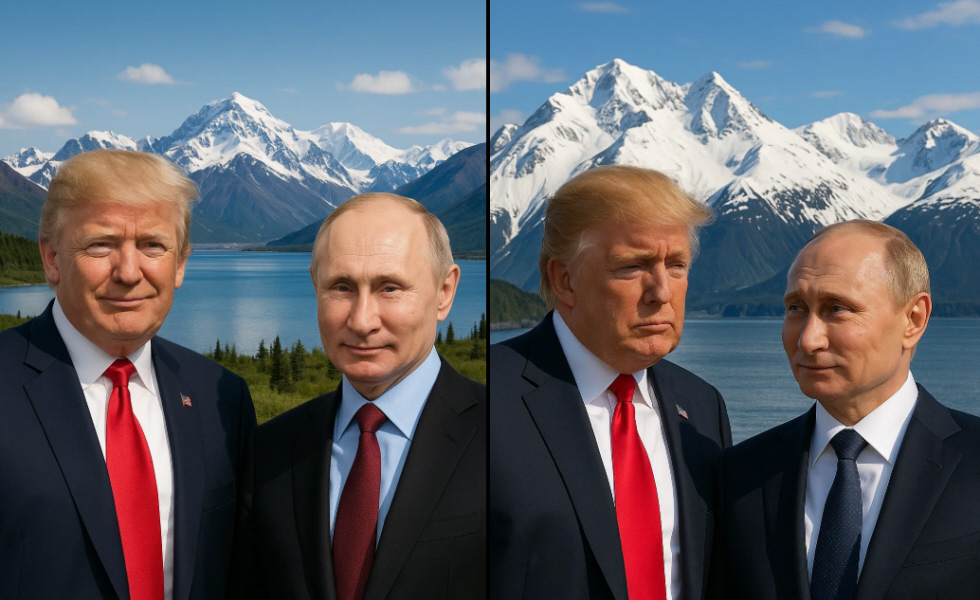
U.S. President Donald Trump will hold a face-to-face meeting with Russian President Vladimir Putin on Friday, August 15, 2025, in Alaska, at a summit designed to address the war in Ukraine and explore a possible cessation of the conflict. This meeting will mark Putin’s first visit to U.S. soil since the United Nations General Assembly in 2015, and it will be the first time since the Governors Island summit in 1988 that a Russian leader is officially received in the United States.
The meeting will take place at the strategic Joint Base Elmendorf-Richardson, located in Anchorage. This military base was chosen for its high security capacity—it can be completely isolated and controlled—as well as for its historical symbolism, given that Alaska belonged to Russia until 1867 and is geographically close to Russian territory. The summit comes after a series of contacts between Trump and international leaders.
Ukrainian President Volodymyr Zelensky has warned that he sees no signs Putin is willing to end the war and has stated that his government will remain alert to potential Russian attempts to blame Ukraine for the failure of a ceasefire. European leaders have also stressed that any territorial negotiations must include Ukraine and begin with an effective ceasefire.
According to sources close to the matter, the meeting will be more of a “listening exercise”—an opportunity for Trump to gain direct insight into Putin’s intentions—than a summit expected to deliver immediate, significant results. President Trump himself suggested that he might be able to tell within minutes whether Putin is truly willing to move toward an agreement. The announcement was surprising both for the choice of location and for the summit’s format.
Alaska, in addition to its historical symbolism, allows Putin to enter without the risk of arrest by the International Criminal Court, of which the U.S. is not a member. Finally, the Anchorage summit carries not only diplomatic implications but also strategic ones within the military and global security landscape, sparking debates about its potential impact on international politics.


